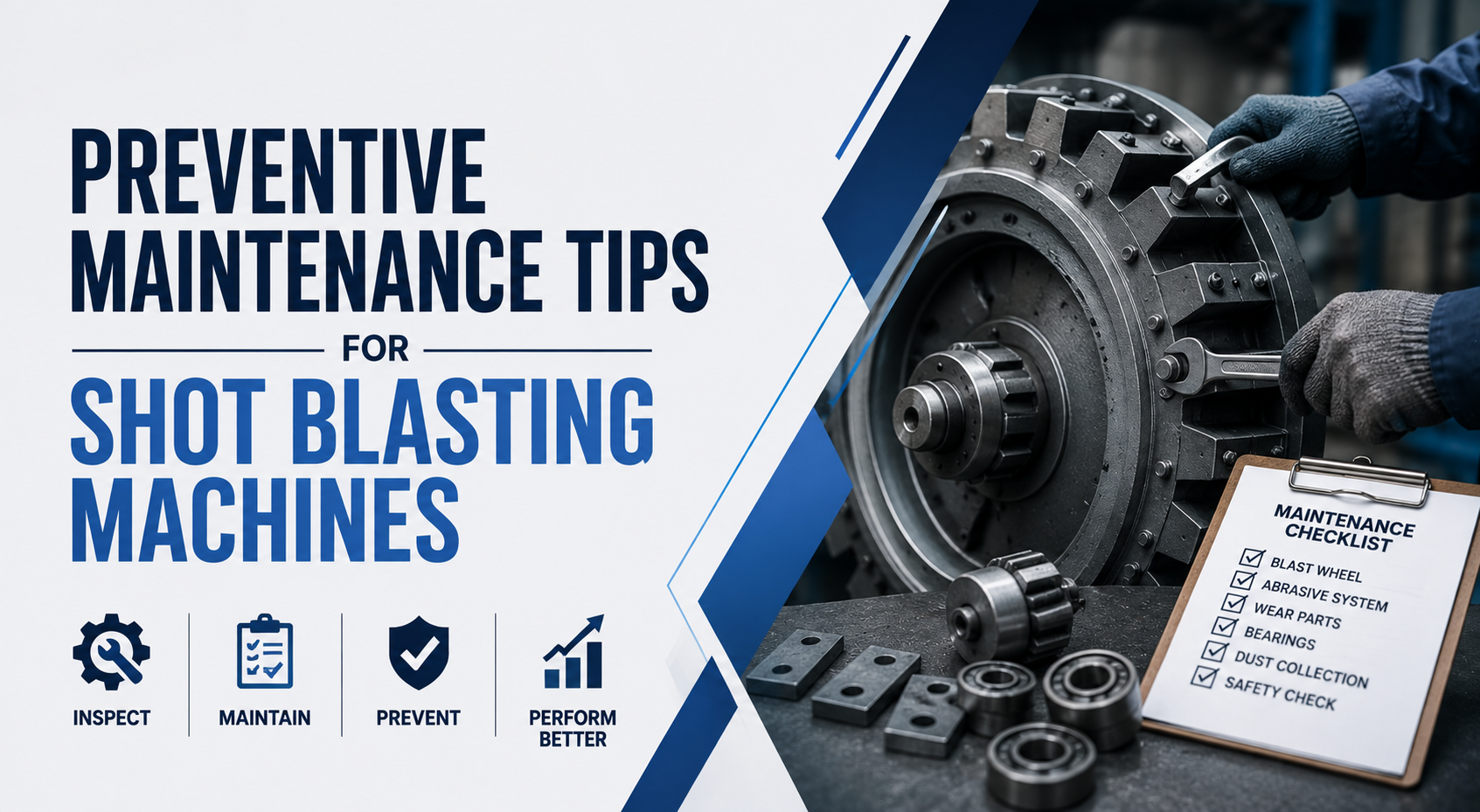
Preventive Maintenance Tips for Shot Blasting Machines
Imagine a shot blasting machine running perfectly on Monday morning.
The abrasive is flowing smoothly. The blast wheel is doing its job. The finished components are coming out clean, uniform and ready for the next stage.
Now imagine the same machine three months later.
The finish is becoming inconsistent. The machine sounds slightly different. Abrasive consumption has increased. Production has slowed down. Someone says, "Maybe we should get it checked."
That is usually when a small maintenance issue has already become a costly production problem.
Shot blasting machines work in an environment that is anything but gentle. They deal with high-speed abrasive particles, continuous vibration, dust, heat and mechanical wear. Naturally, components are going to wear over time.
The good news?
You don't have to wait for the machine to fail before taking care of it.
Preventive maintenance is about catching the small signs before they become big problems.
Here are some practical maintenance habits that can help keep your shot blasting machine performing reliably.
1. Start With the Blast Wheel
Think of the blast wheel as the heart of the machine. It is responsible for accelerating abrasive at high speed, so even small amounts of wear can affect blasting performance.
Regularly inspect the wheel, blades and related components for signs of wear, cracks or damage.
Why does this matter?
Because a worn blade can change the way abrasive is thrown. That can lead to uneven blasting, reduced cleaning efficiency and unnecessary abrasive consumption.
A few minutes of inspection can prevent hours of troubleshooting later.
2. Don't Ignore the Abrasive System
A shot blasting machine depends on a controlled flow of abrasive.
The abrasive should be properly stored, cleaned and circulated. Contaminated or excessively broken-down abrasive can affect surface preparation and increase the load on the machine.
Regularly check the abrasive recovery and separation system.
If the separator is not functioning properly, unwanted dust, broken particles and debris may remain in circulation.
The result? more wear, more dust.
Less consistent blasting.
Sometimes the problem isn't the machine itself. It is what the machine is being asked to circulate.
3. Inspect Wear Plates Regularly
Inside a shot blasting machine, wear plates act as a protective barrier against the constant impact of abrasive.
Naturally, they take a beating. That is their job.
But even protective components have a limit.
Regularly inspect wear plates for excessive thinning, holes or other visible damage. Replacing them at the right time can help protect the machine's internal structure from unnecessary abrasive wear.
Think of wear plates as the machine's armour.
You don't wait until the armour has disappeared to replace it.
4. Listen to Your Machine
Not every maintenance warning comes from an inspection checklist.
Sometimes, the machine tells you, a new vibration.
An unusual grinding sound, a change in the normal operating noise.
These small changes can be early indicators of problems involving bearings, rotating components, alignment or other mechanical parts.
Operators who work with the machine every day often notice these changes first.
So if the machine suddenly sounds different, don't simply turn up the music.
Investigate.
5. Keep Bearings and Moving Parts in Check
Bearings and other moving components operate under demanding conditions.
Dust and abrasive particles can make their working environment even tougher.
Follow the manufacturer's recommendations for lubrication, inspection and replacement. Check for overheating, unusual noise or excessive vibration.
A small bearing issue can eventually affect other components and create an unnecessary production stoppage.
Preventive maintenance is much easier when components are checked before they become emergencies.
6. Check the Dust Collection System
Shot blasting creates dust. That's why the dust collection system is an important part of the overall setup.
Filters, ducts and collection components should be inspected and cleaned or replaced according to operating conditions and manufacturer recommendations.
A poorly maintained dust collection system can affect visibility, housekeeping, working conditions and overall machine performance.
A clean blasting environment isn't just about appearance.
It is part of good machine management.
7. Create a Maintenance Schedule
The biggest maintenance mistake is often simple "We'll check it when we get time."
That time usually arrives after something goes wrong.
Instead, create a routine. Daily checks can focus on unusual noise, vibration, leaks and visible wear.
Weekly inspections can cover critical components and abrasive systems.
Periodic maintenance can include detailed inspection, lubrication, alignment checks and replacement of worn parts according to the manufacturer's recommendations.
Keep a record of what was inspected and when components were replaced.
Over time, these records can reveal patterns and help you plan maintenance before a breakdown happens.
The Best Maintenance Strategy Is the One You Do Before the Breakdown
A shot blasting machine is an investment in productivity. Keeping it running efficiently requires more than simply switching it on every morning.
It requires attention and observation. And most importantly, it requires consistency.
Because the difference between a minor maintenance task and a major production interruption can sometimes be just one ignored warning sign.
At SPT Blastech, we understand that reliable shot blasting performance starts with the right machine and continues with the right care.
Don't wait for your machine to ask for maintenance.
Give it the attention it needs before the breakdown asks for your production time.
SPT Blastech
Built for Performance. Engineered for Precision.