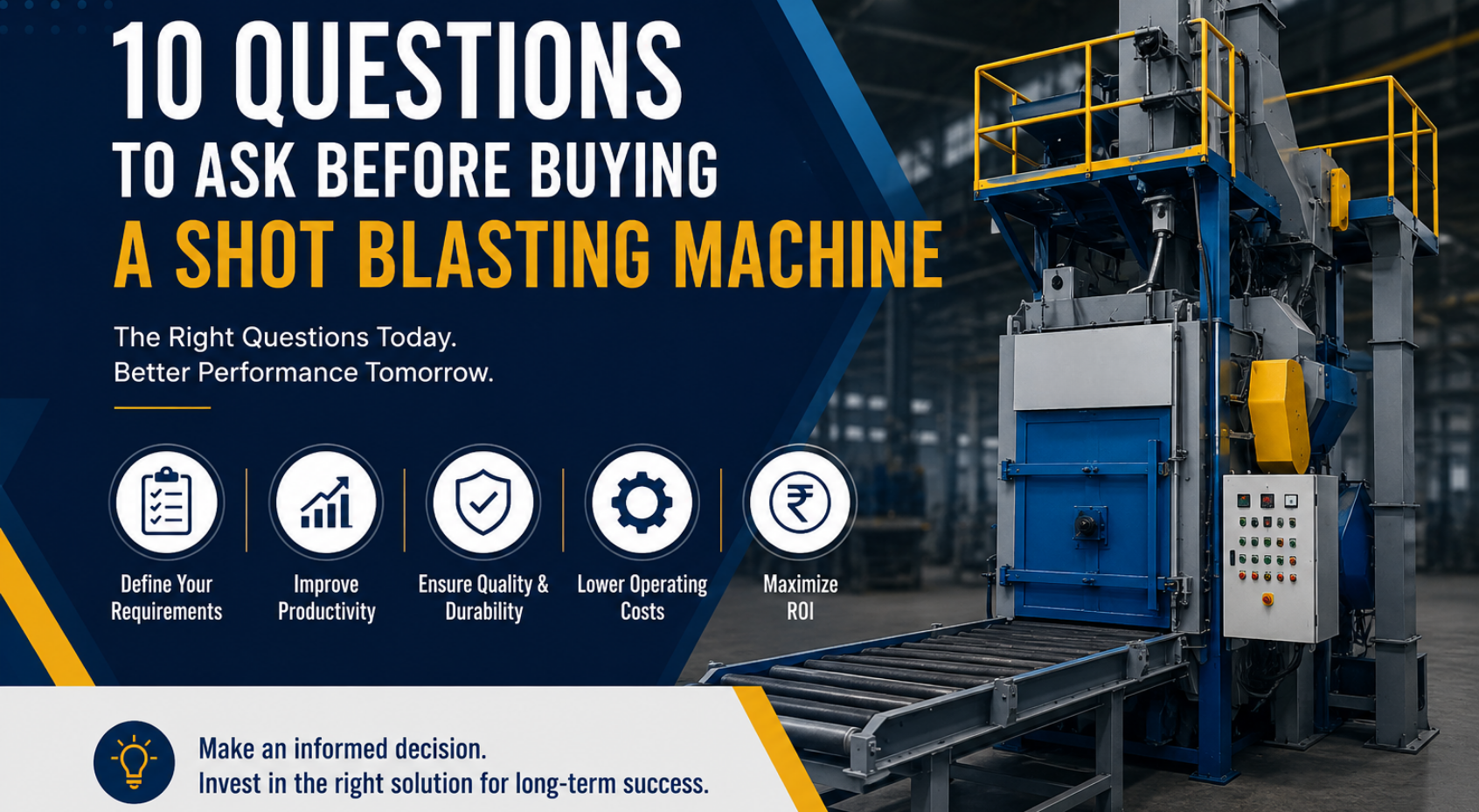
Buying the wrong shot blasting machine can cost far more than the machine itself
For many manufacturers, purchasing a shot blasting machine is a major capital investment. The decision affects production efficiency, surface preparation quality, coating performance, maintenance expenses, and long-term profitability.
Yet many buyers make the mistake of comparing machines based primarily on purchase price.
A machine that appears less expensive initially may eventually cost significantly more through excessive abrasive consumption, higher maintenance requirements, frequent downtime, poor blasting performance, and production delays.
The right machine should not simply meet today's requirements. It should support future growth, maintain consistent blasting quality, and deliver reliable performance for years.
Before investing in a shot blasting machine, every buyer should ask the following critical questions.
Why asking the right questions matters
Every manufacturing facility has unique requirements.
A shot blasting machine that performs exceptionally well for a foundry may not be suitable for structural steel fabrication. Likewise, a machine designed for high-volume production may be unnecessary for smaller operations.
Selecting the wrong machine can result in:
- Increased operating costs
- Excessive maintenance expenses
- Higher abrasive consumption
- Production bottlenecks
- Inconsistent blasting quality
- Coating failures
- Reduced profitability
At SPT Blastech, we frequently work with manufacturers that initially selected equipment based on purchase price rather than long-term performance requirements. In many cases, the resulting operating costs exceed the original savings.
1. What type of components will be processed?
This is the most important question to answer before evaluating any machine.
The size, shape, weight, and complexity of your components determine the type of shot blasting machine required.
Consider:
- Component dimensions
- Weight
- Geometry
- Surface condition
- Daily production volume
Different applications require different solutions.
For example:
- Structural steel sections often require roller conveyor machines.
- Castings are commonly processed in tumble belt systems.
- Fabricated assemblies may require hanger-type machines.
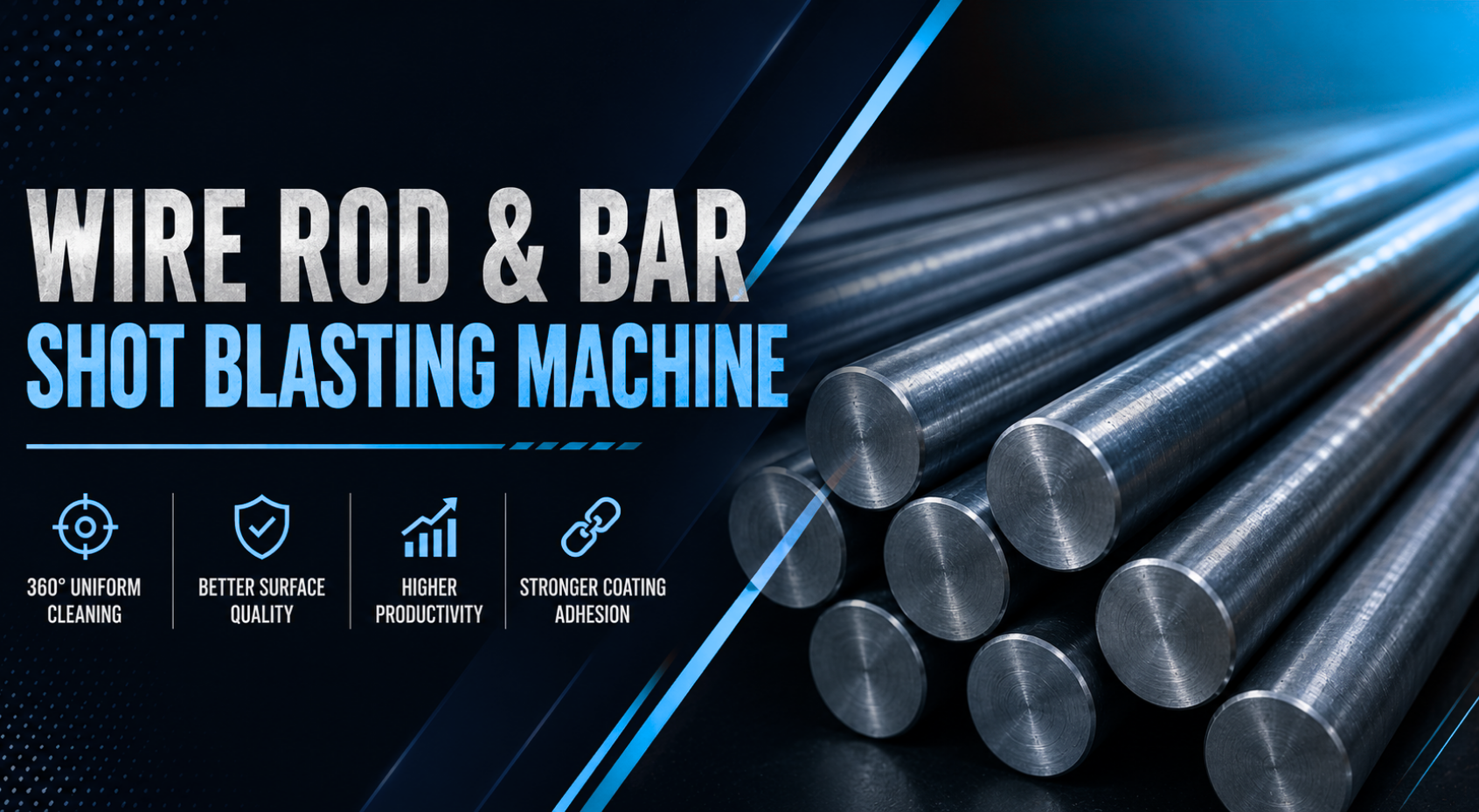
- Pipes require dedicated pipe blasting solutions.
Choosing the wrong machine type often leads to reduced productivity, increased handling time, and higher operating costs.
2. What production capacity is required?
Many buyers focus on current production requirements while overlooking future growth.
Questions to consider include:
- How many components must be processed per shift?
- What throughput is required per hour?
- Will production volumes increase within the next three to five years?
An undersized machine can quickly become a production bottleneck.
Consequences may include:
- Delayed deliveries
- Increased overtime costs
- Reduced plant efficiency
- Customer dissatisfaction
At the same time, investing in an oversized machine can unnecessarily increase energy consumption and capital expenditure.
The ideal solution balances current needs with future expansion plans.
3. Which type of shot blasting machine is best for my industry?
Not all shot blasting machines are designed for the same applications.
Common machine categories include:
Tumble Belt Shot Blasting Machines
Best suited for:
- Small castings
- Forged parts
- Automotive components
Hanger Type Shot Blasting Machines
Best suited for:
- Fabricated structures
- Complex geometries
- Delicate components
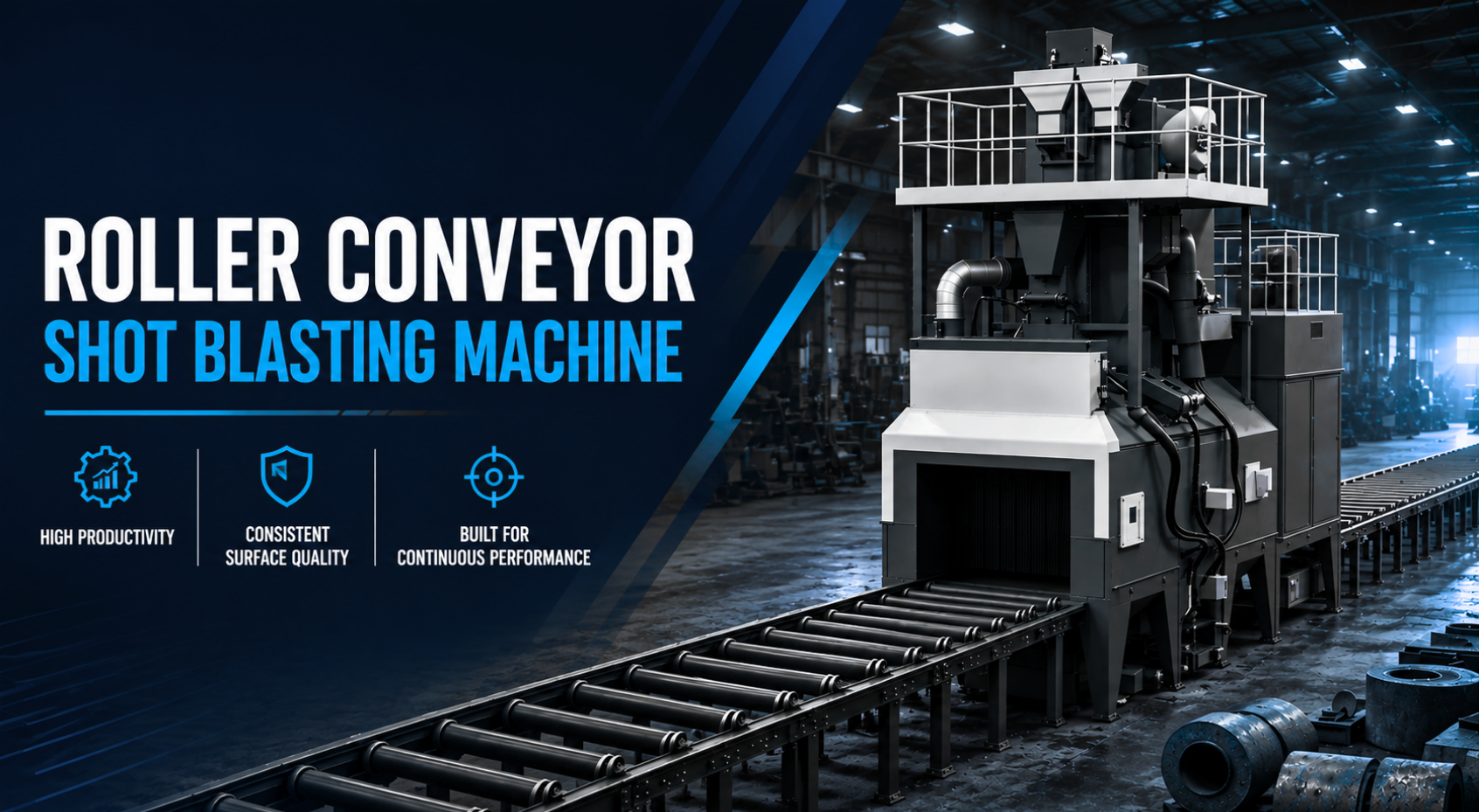
Roller Conveyor Shot Blasting Machines
Best suited for:
- Steel plates
- Structural sections
- Beams and profiles
Pipe Shot Blasting Machines
Best suited for:
- Pipes
- Cylindrical products
Table Type Machines
Best suited for:
- Heavy workpieces
- Flat components
Selecting the correct machine configuration improves blasting efficiency, surface quality, and overall productivity.
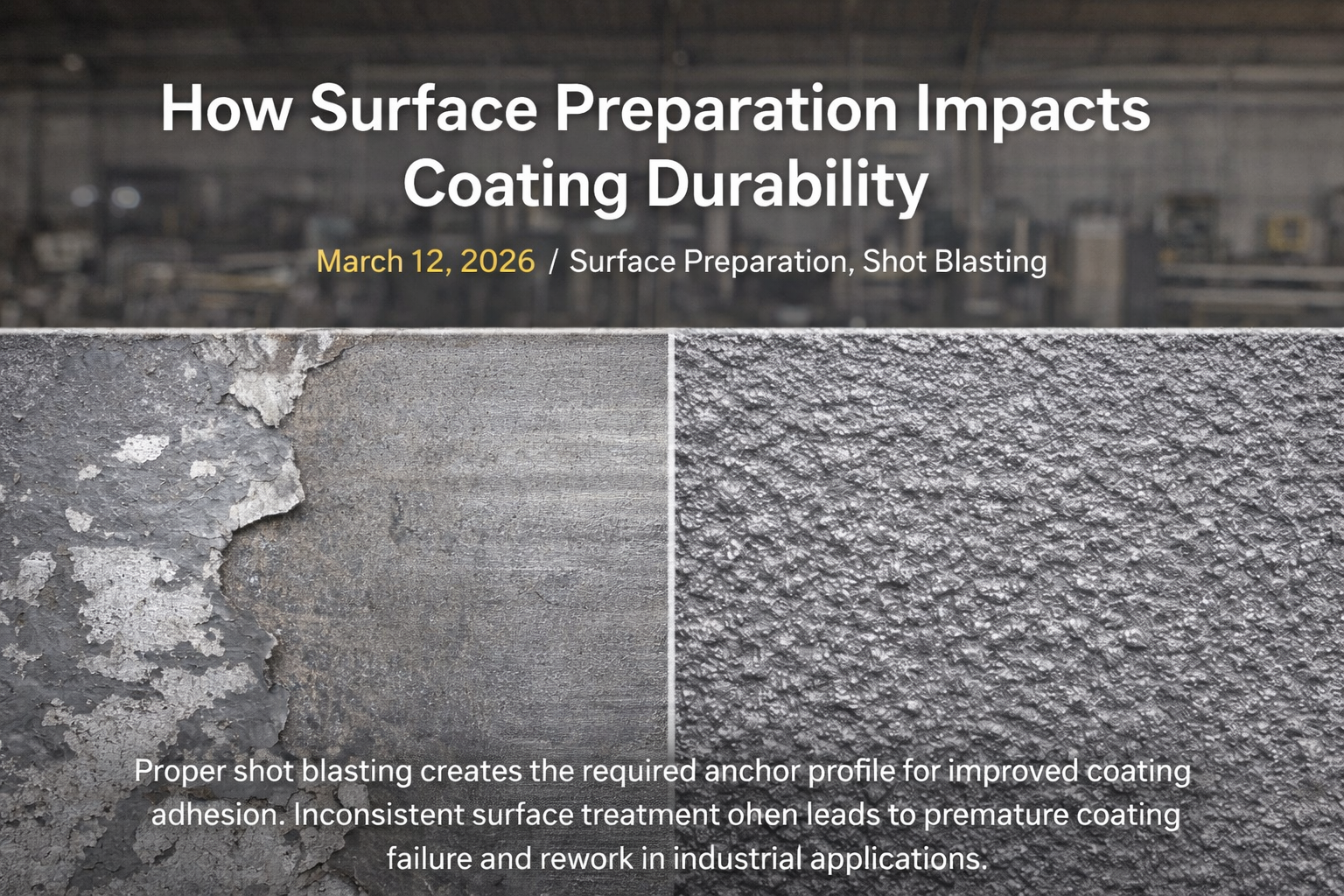
4. What surface finish is required?
The ultimate goal of shot blasting is not simply cleaning steel.
The objective is to create the surface condition required for coating adhesion, corrosion resistance, and long-term performance.
Important considerations include:
- Surface cleanliness standards
- Anchor profile requirements
- Coating specifications
- Customer requirements
Questions to ask include:
- Can the machine achieve Sa 2.5 cleanliness?
- Can it produce the required anchor profile?
- How consistent is blasting quality across the entire surface?
Poor surface preparation often results in coating failures, premature corrosion, warranty claims, and costly rework.
5. What type of abrasive will be used?
Abrasive selection directly affects operating costs and blasting efficiency.
Common options include:
Steel Shot
Typically used for:
- Cleaning applications
- Shot peening
- Smooth surface finishes
Steel Grit
Typically used for:
- Rust removal
- Surface profiling
- Aggressive cleaning
Mixed Media Systems
Often used when both cleaning and profiling are required.
Important questions include:
- Which abrasive is recommended?
- What media size is appropriate?
- What is the expected consumption rate?
- How efficient is the recovery system?
Poor abrasive management can significantly increase operating expenses over the life of the machine.
6. How effective is the dust collection system?
Dust collection is often overlooked during machine evaluation.
However, inadequate dust extraction can negatively affect both productivity and blasting quality.
Potential consequences include:
- Reduced visibility
- Inconsistent surface preparation
- Premature equipment wear
- Workplace contamination
- Safety concerns
Questions to ask include:
- What filtration technology is used?
- Is automatic filter cleaning included?
- What filtration efficiency is achieved?
- Does the system meet environmental requirements?
At SPT Blastech, we often find that poor dust collection is one of the most common causes of blasting inconsistency and excessive maintenance costs.
7. What are the true operating and maintenance costs?
The machine purchase price represents only a fraction of the total ownership cost.
Long-term expenses include:
Abrasive Consumption
- Media replacement
- Recovery efficiency
- Waste generation
Energy Consumption
- Blast wheel motors
- Dust collection systems
- Material handling equipment
Wear Components
- Turbine blades
- Impellers
- Control cages
- Chamber liners
Preventive Maintenance
- Scheduled inspections
- Routine servicing
- Spare parts replacement
A machine with a lower purchase price may ultimately become more expensive if operating costs are significantly higher.
Smart buyers evaluate lifecycle cost rather than purchase price alone.
8. Is the machine built for long-term durability?
Shot blasting environments are extremely abrasive.
Durability directly affects uptime, maintenance requirements, and profitability.
Key areas to inspect include:
Blast Chamber Construction
Look for:
- Heavy-duty fabrication
- Wear-resistant liners
- Reinforced chamber walls
Blast Wheel Design
The blast wheel is the heart of the machine.
Ask:
- What materials are used?
- What is the expected service life?
- How efficient is the turbine system?
Wear Protection
Quality systems typically include:
- Replaceable wear plates
- Manganese steel liners
- High-chromium wear components
Machines engineered for durability generally provide lower maintenance costs and higher reliability throughout their service life.
9. What after-sales support is available?
Even the best machine requires support, maintenance, and spare parts throughout its lifecycle.
Before making a purchase, evaluate the supplier's ability to provide:
- Installation assistance
- Operator training
- Spare parts availability
- Technical support
- Warranty coverage
One of the most overlooked risks when purchasing industrial equipment is inadequate after-sales support.
A machine is only as reliable as the support system behind it.
10. What return on investment can be expected?
Every equipment purchase should generate measurable business value.
Potential benefits include:
- Increased productivity
- Reduced labor costs
- Lower abrasive consumption
- Improved coating performance
- Reduced rework
- Higher product quality
The most successful buyers evaluate machines based on long-term financial impact rather than initial purchase price.
A properly selected shot blasting machine can continue delivering value for many years through improved efficiency and lower operating costs.
Common mistakes buyers should avoid
Several purchasing mistakes repeatedly lead to disappointing results.
These include:
- Choosing a machine based only on price
- Ignoring future production growth
- Selecting the wrong machine type
- Underestimating maintenance requirements
- Overlooking dust collection performance
- Ignoring abrasive consumption costs
- Failing to evaluate after-sales support
Avoiding these mistakes significantly increases the likelihood of a successful investment.
Quick comparison: wrong choice vs right choice
| Factor | Wrong Choice | Right Choice |
| Capacity | Production delays | Smooth workflow |
| Abrasive System | High media consumption | Lower operating costs |
| Dust Collection | Poor visibility and quality | Consistent blasting performance |
| Machine Type | Reduced productivity | Maximum efficiency |
| After-Sales Support | Longer downtime | Faster issue resolution |
| Durability | Frequent repairs | Reliable long-term operation |
Frequently asked questions
How long does a shot blasting machine typically last?
A well-maintained shot blasting machine can operate efficiently for many years. The actual lifespan depends on machine quality, operating conditions, maintenance practices, and wear protection systems.
Which shot blasting machine is best for structural steel?
Roller conveyor shot blasting machines are commonly used for structural steel fabrication because they can process plates, beams, and sections efficiently.
How important is abrasive recovery efficiency?
Abrasive recovery efficiency directly impacts operating costs. Poor recovery systems increase media consumption and waste, resulting in higher expenses.
What is the biggest mistake buyers make?
The most common mistake is selecting a machine based solely on purchase price rather than evaluating total lifecycle cost.
Why is after-sales support important?
Fast access to technical support and spare parts helps minimize downtime and protects productivity.
Final takeaway
Buying a shot blasting machine is not simply about selecting equipment. It is about investing in long-term productivity, surface preparation quality, operational efficiency, and profitability.
The right machine should match your application requirements, production goals, maintenance expectations, and future growth plans.
By asking the right questions before purchasing, manufacturers can avoid costly mistakes, reduce operating expenses, and maximize return on investment.
Need help selecting the right shot blasting machine?
Choosing the wrong machine can result in years of unnecessary maintenance costs, production challenges, and operational inefficiencies.
At SPT Blastech, we help manufacturers evaluate:
- Production requirements
- Component types
- Surface preparation standards
- Future expansion plans
- Lifecycle operating costs
Our goal is to help you select a solution that delivers reliable performance, lower operating costs, and long-term value.
Contact SPT Blastech today and speak with our experts before making your investment decision.