Why surface preparation decides coating life
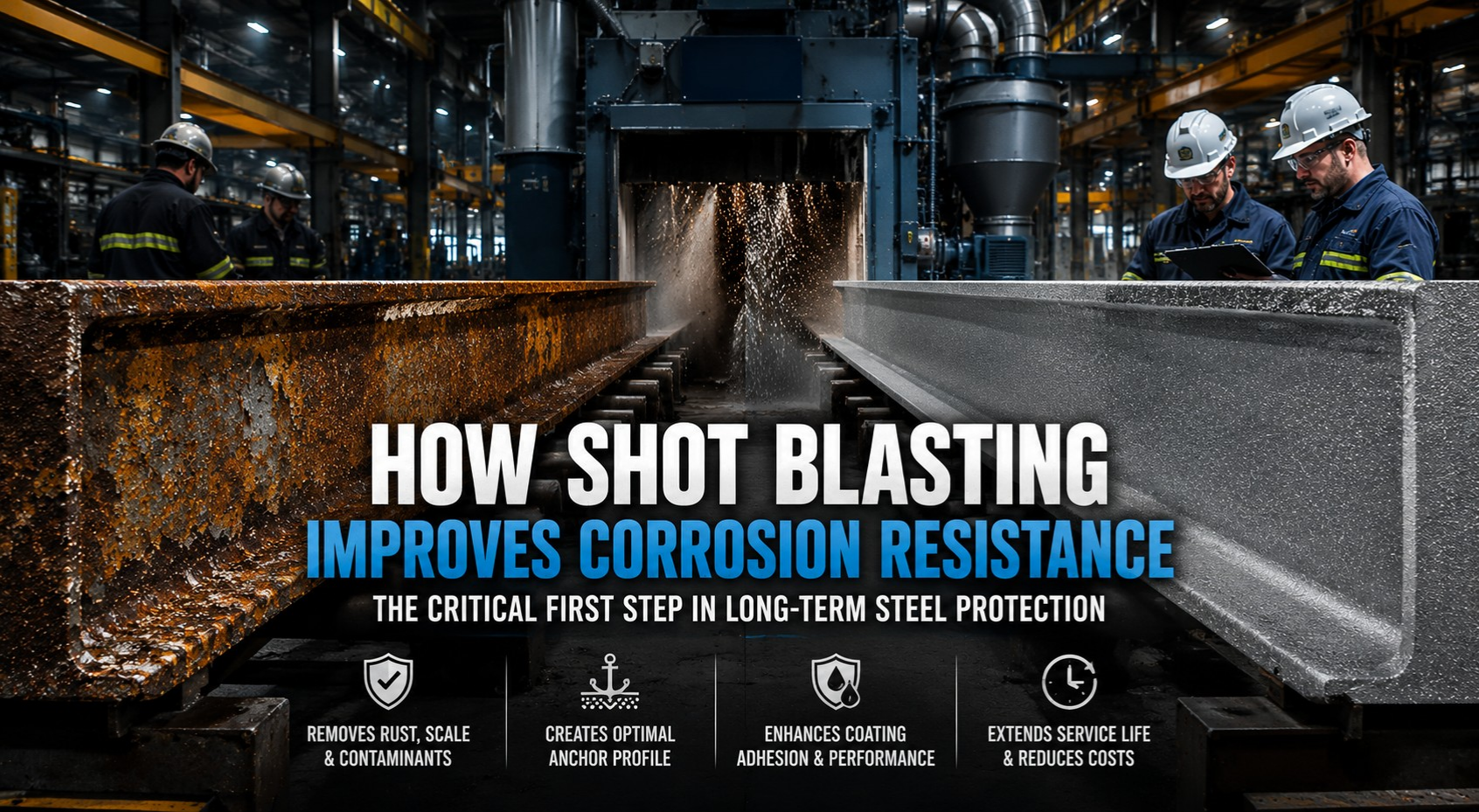
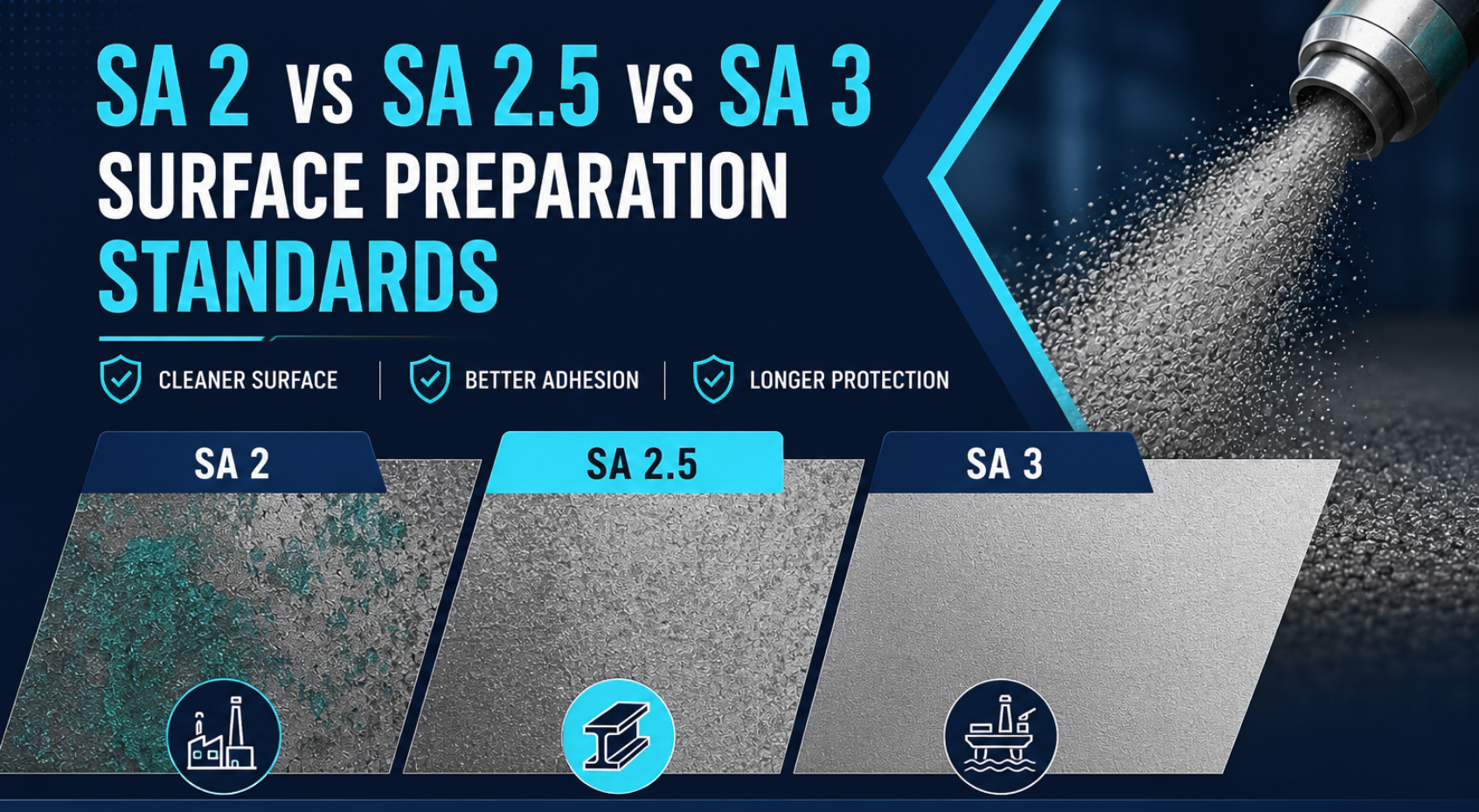
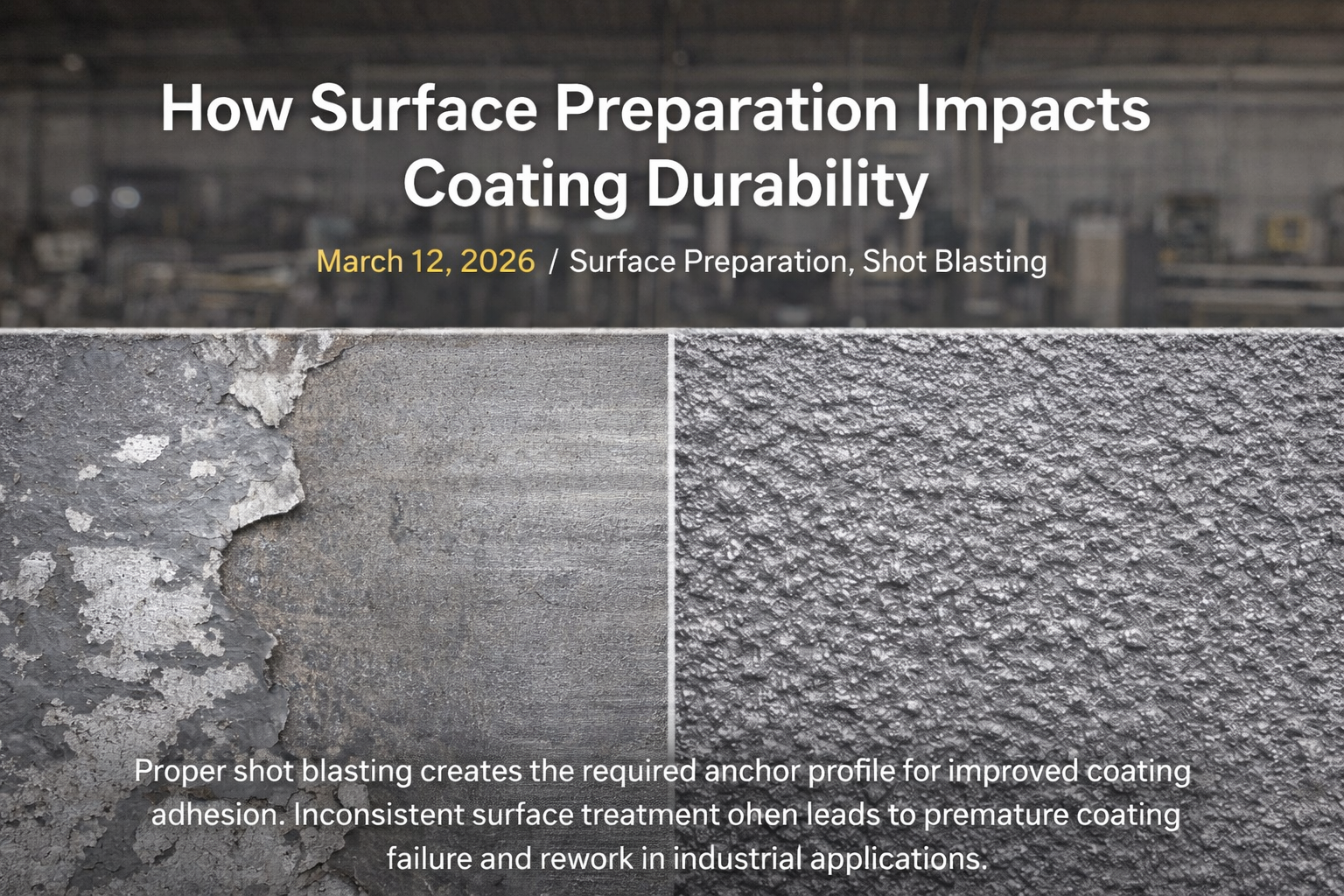
Industrial coatings do not fail only because of paint chemistry. In most failure investigations, the root cause is poor surface preparation hidden under an otherwise acceptable film. When the substrate is not cleaned to the right standard, or when the anchor profile is inconsistent, the coating cannot develop durable adhesion. The result appears later as blistering, peeling, rust creep from edges, and frequent maintenance cycles that should have been avoided.
In real fabrication environments, teams focus heavily on dispatch pressure and visual finish. Surface preparation is sometimes treated as a preliminary cleaning step rather than a technical control process. This mindset creates risk. Surface preparation is the stage that determines whether your coating will behave predictably for years or degrade in months under moisture, abrasion, and thermal variation.
Anchor profile is the mechanical foundation of adhesion
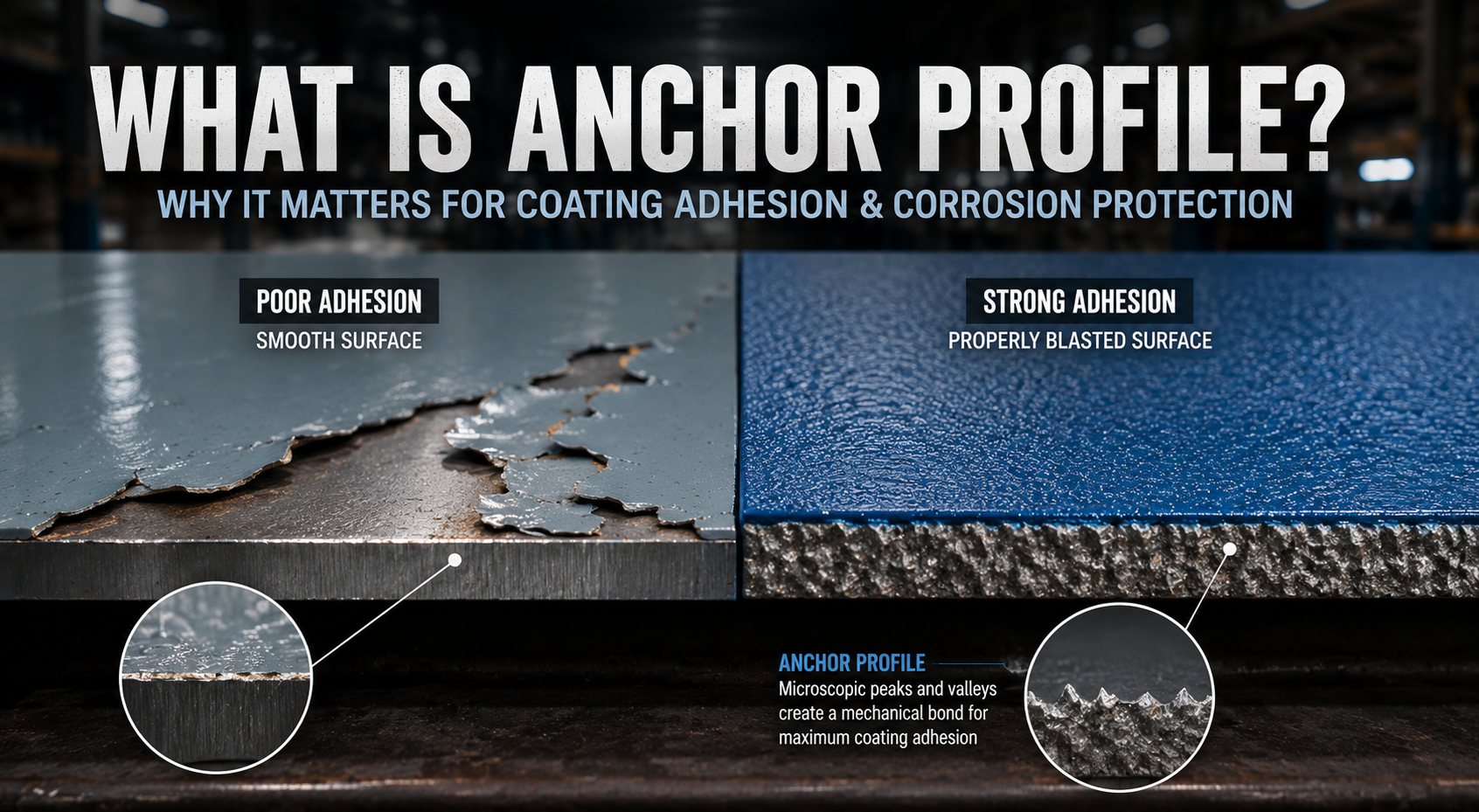
Anchor profile refers to the controlled roughness generated after blasting. It creates microscopic peaks and valleys that allow primer and coating systems to grip the metal surface mechanically. Without this profile, coating bonds are mostly superficial and vulnerable to stress.
The correct target is not the highest roughness possible. If profile is too shallow, adhesion is weak. If profile is too deep, paint consumption rises and it becomes difficult to achieve uniform film build. A controlled profile matched to coating specification is essential.
Across industrial plants, profile inconsistency is a larger issue than profile average. Measuring one location and approving the batch is not enough. Multiple checks across geometry transitions, weld zones, and recessed features are required. Localized under-preparation can trigger early edge failure even when central flat areas look acceptable.
Cleanliness controls before blasting matter as much as blasting itself
Blasting cannot compensate for heavy oil films, residual grease, salts, and process contaminants left from machining or handling. If contamination remains, the coating may bond to contamination instead of metal. Moisture then migrates under the film and starts underfilm corrosion.
Effective pre-cleaning should include degreasing, drying, and controlled handling. Parts should not move from oily staging directly into the blasting stream without preparation checks. In many facilities, this is the first gap that leads to rework.
Post-blast cleanliness is equally critical. Dust residue on freshly blasted surfaces can reduce coating wetting and interface quality. If the painted finish looks acceptable but dust remains trapped, premature failure is still likely in service conditions.
Process variables that control blasting quality
Surface preparation is the combined result of several variables operating together:
- Abrasive type, hardness, and size distribution
- Blast wheel or nozzle condition and velocity stability
- Throw angle, stand-off distance, and exposure time
- Workpiece orientation and loading consistency
- Separator efficiency and reclaim quality
- Dust extraction balance and chamber visibility
If any one of these variables drifts, output consistency drops. The best shops treat blasting as a parameter-controlled process with setup standards, periodic verification, and shift-level accountability.
Time delay between blasting and coating is a hidden failure driver
Freshly blasted steel is reactive. In humid conditions, oxidation can begin quickly. Even light flash rust can interfere with adhesion and long-term corrosion resistance. Plants with disconnected blasting and painting schedules often create this risk without noticing it.
Define a maximum allowable window from blasting completion to primer application. If that window is exceeded, re-preparation should be mandatory. This policy is especially important during monsoon periods and in coastal regions where ambient moisture is high.
Integrated line planning helps. When blasting and coating teams coordinate dispatch priority, exposure risks drop and quality becomes more predictable.
Dust extraction and abrasive reclaim influence coating life
Dust control is not just housekeeping. Poor extraction contaminates recycled abrasive with fines and debris, reducing impact efficiency and profile consistency. It also lowers visibility inside the chamber, making process deviations harder to detect.
A well-tuned reclaim and separation system removes broken particles and contamination while retaining usable media. This improves surface consistency, stabilizes cycle time, and reduces abrasive waste. As a side benefit, wear on turbines and liners becomes more predictable, lowering maintenance shocks.
Inspection should be preventive, not documentary
Many plants inspect only after blasting is complete, and often only visually. This is insufficient for high-reliability coating performance. A preventive inspection model includes:
- Pre-blast contamination check
- In-process parameter verification
- Profile measurements at multiple locations
- Dust and cleanliness check before paint
- Ambient condition capture at coating point
The objective is to stop defects before coating starts. Once paint is applied, hidden preparation defects become costly to correct.
Standardization and training create repeatability
As order mix grows, process variation naturally increases. Without standards, quality depends heavily on individual operator experience. That is not scalable. Standardized work instructions, part family recipes, loading guides, and escalation triggers help maintain performance under pressure.
Operator training should include not only machine operation but also failure mechanisms. Teams should understand why profile matters, how contamination behaves, and what early warning signs indicate drift. When operators understand cause and effect, process discipline improves naturally.
Cost impact of preparation discipline
The economic impact of proper preparation is significant. Good control reduces rework, paint overconsumption, field complaints, and warranty risk. It also stabilizes throughput because fewer parts require re-blasting or corrective coating cycles.
Shortcuts can look efficient in the short term but usually increase total cost of ownership. The correct benchmark is lifecycle performance, not only immediate dispatch speed.
In high-volume plants, even small reductions in rework percentage create large annual savings. In project-based operations, reliability gains improve customer trust and repeat business.
Data-driven improvement strategy
Simple data practices can improve preparation quality quickly. Track profile compliance rate, blasting-to-coating delay, abrasive consumption per ton, and rework causes by part family. Review trends weekly and link corrective actions to measurable outcomes.
This does not require expensive systems at the start. Even a disciplined checklist and dashboard approach can reveal recurring weaknesses and guide targeted improvements.
Recommended implementation plan for fabrication plants
Plants that want reliable improvement should avoid one-time correction drives and adopt phased execution. A practical sequence starts with baseline audit, then process stabilization, then optimization.
Phase one should identify current profile variation, contamination sources, blasting-to-coating delays, and top rework causes. Phase two should standardize machine settings by part family, define hold points, and align blasting with paint scheduling windows. Phase three should use weekly KPI reviews to tighten control limits and reduce variation further.
The advantage of this phased method is operational continuity. Production does not need to stop for a major overhaul. Improvement becomes part of daily work rather than an isolated quality project.
Management actions that sustain quality
Sustainable preparation quality requires leadership visibility. Supervisors should review parameter logs, inspection outcomes, and rejection trends during daily production meetings. Procurement teams should ensure abrasive and consumable quality remains consistent across suppliers. Maintenance teams should align preventive schedules with duty cycle reality, not calendar assumptions alone.
When management integrates these actions, process discipline survives staffing changes and volume fluctuations. That is the real marker of a mature surface preparation system.
Plant-level checklist before approving coated dispatch
Before final dispatch, teams should confirm a short set of non-negotiables:
- Surface preparation records are complete and traceable.
- Profile checks meet specification across critical geometry.
- Dust and contamination controls are verified before painting.
- Blasting-to-coating delay remained inside approved limits.
- Any deviations were corrected and documented.
Using this checklist consistently reduces avoidable field issues and builds trust with quality auditors and end customers.
Final takeaway
Surface preparation is not a support activity. It is the structural base of coating durability. If profile control, cleanliness, timing, and process discipline are strong, coatings perform as designed. If these controls are weak, coating failure becomes a matter of time, not chance.
For organizations that want longer maintenance intervals, lower lifecycle cost, and better field reliability, the path is clear: engineer the surface preparation process with the same seriousness as coating selection itself. Durable coatings begin long before paint reaches the surface.