Choosing the wrong blasting standard can lead to coating failure
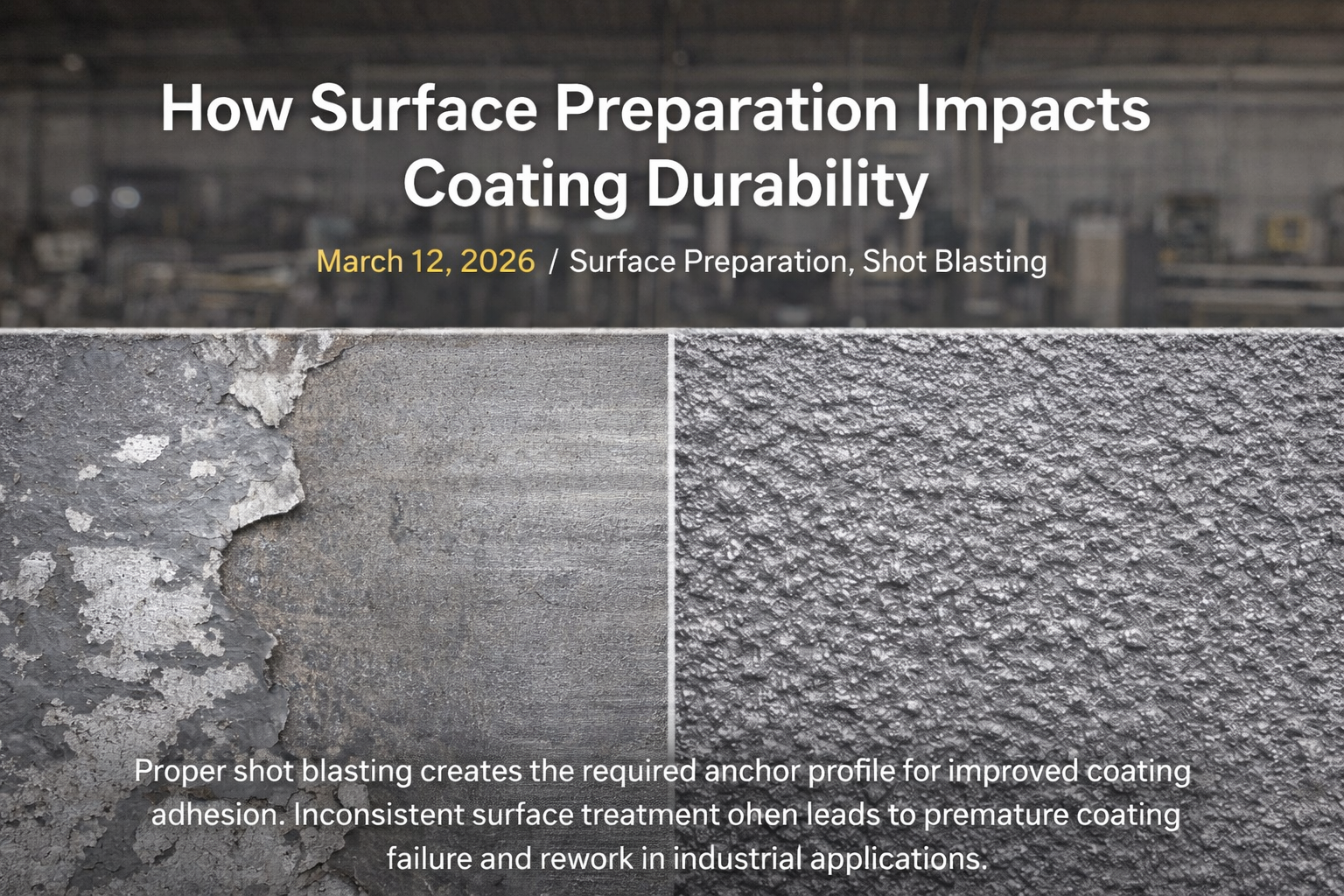
Many manufacturers invest heavily in premium coatings, high-performance primers, and corrosion protection systems. However, even the best coating system can fail if the steel surface is not prepared to the correct standard before painting.
One of the most common questions engineers, fabricators, and project managers ask is:
"Should we use Sa 2, Sa 2.5, or Sa 3 surface preparation?"
The answer depends on the service environment, coating specification, project requirements, and expected asset life.
Choosing a lower preparation standard than required can result in premature coating failure, while selecting a higher standard than necessary may increase project costs without providing additional benefits.
Understanding the differences between Sa 2, Sa 2.5, and Sa 3 helps manufacturers balance quality, performance, and cost effectively.
What are Sa standards?
Sa standards are internationally recognized surface preparation grades defined under ISO 8501-1.
These standards describe the cleanliness level achieved after abrasive blasting steel surfaces.
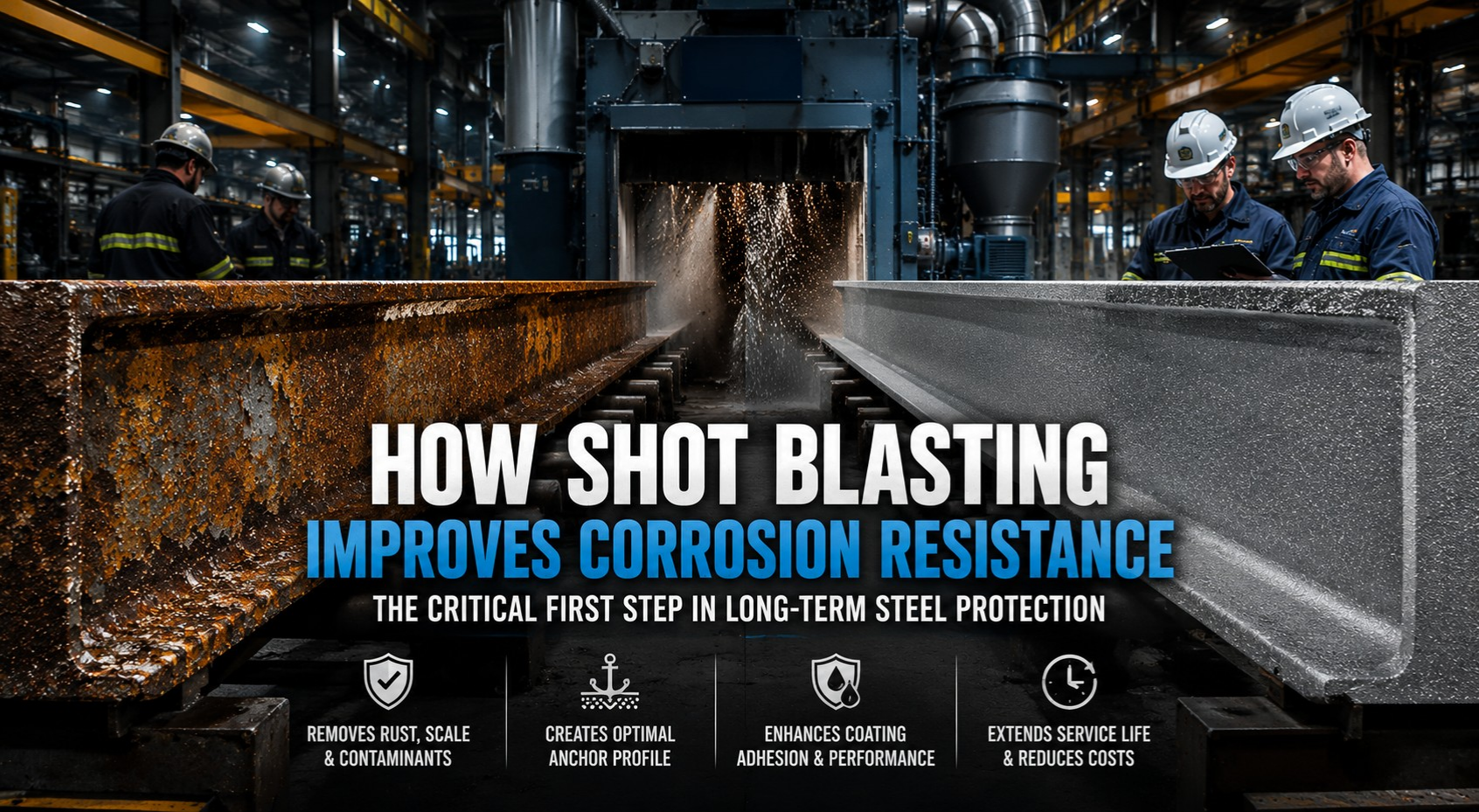
The primary purpose of blasting is to remove:
- Rust
- Mill scale
- Old coatings
- Oxidation
- Surface contaminants
The cleaner the surface, the better the coating adhesion and corrosion resistance.
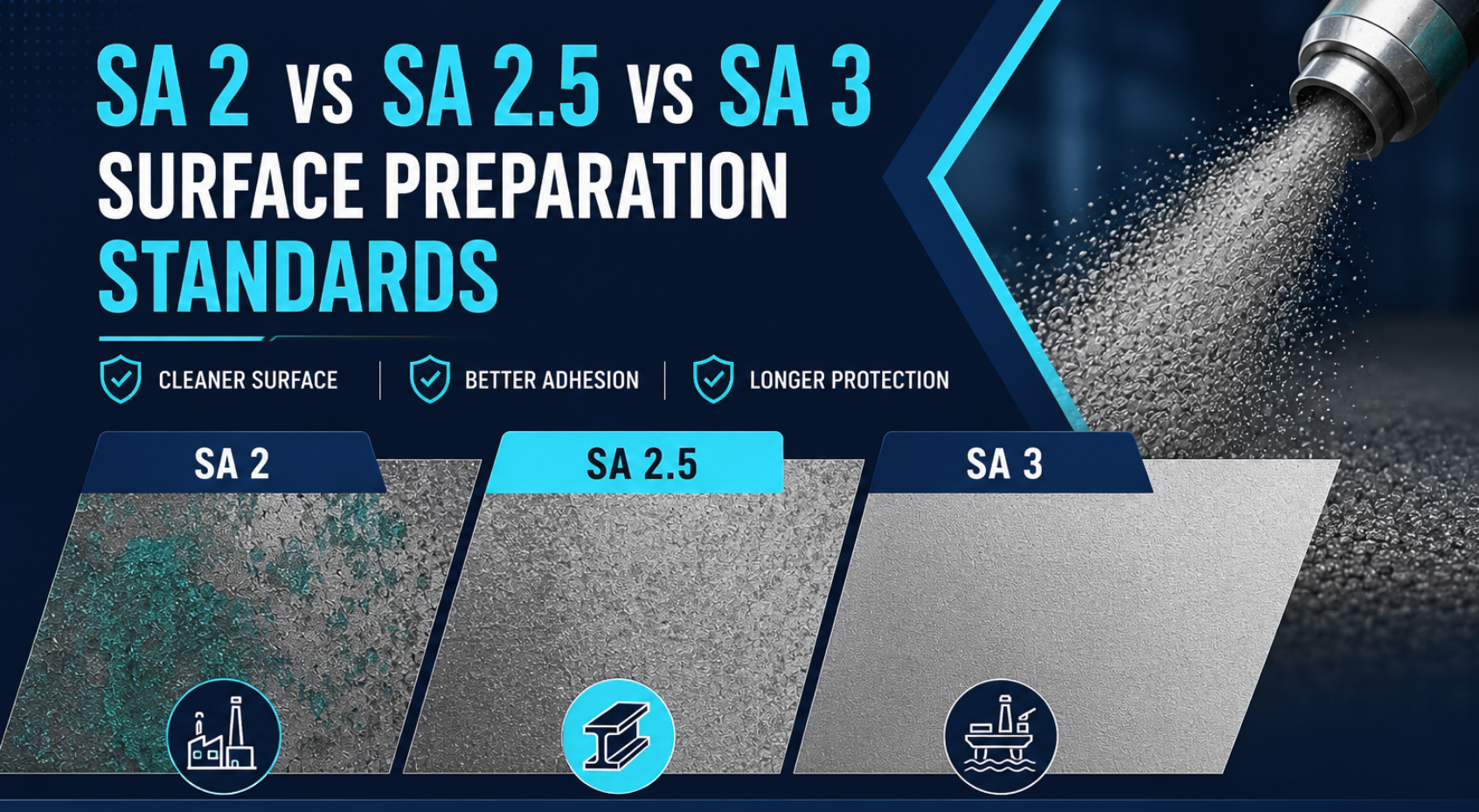
The three most commonly specified blasting grades are:
- Sa 2
- Sa 2.5
- Sa 3
Each represents a different level of surface cleanliness.
Why surface preparation standards matter
Many coating failures begin beneath the paint film.
When contaminants remain on the surface:
- Adhesion weakens
- Moisture penetrates more easily
- Corrosion develops faster
- Coating lifespan decreases
At SPT Blastech, we frequently see projects where coating problems are traced back to inadequate surface preparation rather than coating quality.
Proper blasting standards create the foundation for long-term coating performance.
What is Sa 2?
Sa 2 is commonly known as:
Thorough Blast Cleaning
Under Sa 2 preparation:
- Most rust is removed
- Most mill scale is removed
- Most old coating residues are removed
- Surface contamination is substantially reduced
However, slight staining, shadows, and tightly adherent residues may still remain.
Typical appearance
The surface appears generally clean but may contain small areas of discoloration.
Common applications
Sa 2 is often used for:
- General industrial equipment
- Temporary structures
- Low-corrosion environments
- Non-critical applications
Limitations
Although Sa 2 provides acceptable cleaning for many applications, it may not deliver sufficient protection in aggressive environments.
Using Sa 2 where higher standards are required often leads to premature coating failure.
What is Sa 2.5?
Sa 2.5 is commonly referred to as:
Near White Metal Blast Cleaning
This is the most widely specified blasting standard across industrial projects.
Under Sa 2.5:
- Rust is removed almost completely
- Mill scale is removed almost completely
- Old coatings are removed almost completely
- Contaminants are eliminated to a very high degree
Only very slight shadows, streaks, or discoloration may remain.
Typical appearance
The surface appears almost entirely metallic and uniformly clean.
Common applications
Sa 2.5 is widely used in:
- Structural steel fabrication
- Oil and gas facilities
- Power plants
- Bridges
- Heavy engineering projects
- Industrial equipment manufacturing
Why it is preferred
Sa 2.5 provides an excellent balance between:
- Coating performance
- Corrosion resistance
- Project cost
- Production efficiency
This is why most industrial coating specifications require Sa 2.5 preparation.
What is Sa 3?
Sa 3 is known as:
White Metal Blast Cleaning
This is the highest blasting cleanliness standard.
Under Sa 3:
- All visible rust is removed
- All mill scale is removed
- All coating residues are removed
- All contamination is eliminated
The surface should appear completely uniform with no visible discoloration or staining.
Typical appearance
The steel appears bright, clean, and uniformly metallic.
Common applications
Sa 3 is typically specified for:
- Offshore structures
- Marine environments
- Critical infrastructure
- Severe corrosion environments
- High-value assets
Challenges
Although Sa 3 provides maximum cleanliness, it also:
- Increases blasting time
- Increases abrasive consumption
- Raises operating costs
- Extends project duration
For many applications, Sa 2.5 delivers comparable performance at a lower cost.
Quick comparison: Sa 2 vs Sa 2.5 vs Sa 3
| Standard | Cleanliness Level | Typical Use |
| Sa 2 | Thorough Blast Cleaning | General industrial applications |
| Sa 2.5 | Near White Metal Blast Cleaning | Structural steel, fabrication, industrial coatings |
| Sa 3 | White Metal Blast Cleaning | Marine, offshore, severe corrosion environments |
Which standard should you choose?
The correct standard depends on several factors.
Choose Sa 2 when:
- Corrosion exposure is low
- Asset life requirements are moderate
- Budget constraints are significant
- Coating specification allows it
Choose Sa 2.5 when:
- Long-term coating performance is required
- Structural steel is involved
- Corrosion protection is important
- Industry specifications demand high-quality preparation
Choose Sa 3 when:
- Assets operate in severe environments
- Maximum corrosion resistance is required
- Failure consequences are extremely costly
- Offshore or marine exposure exists
Common mistakes when selecting blasting standards
Several mistakes occur repeatedly during project planning.
Selecting Sa 2 to reduce costs
Lower blasting costs often lead to higher maintenance expenses later.
Paying for Sa 3 unnecessarily
Some projects specify Sa 3 despite operating in environments where Sa 2.5 is more than adequate.
Ignoring coating manufacturer recommendations
Coating systems are often designed around specific preparation standards.
Ignoring these recommendations can compromise performance.
Focusing only on cleanliness
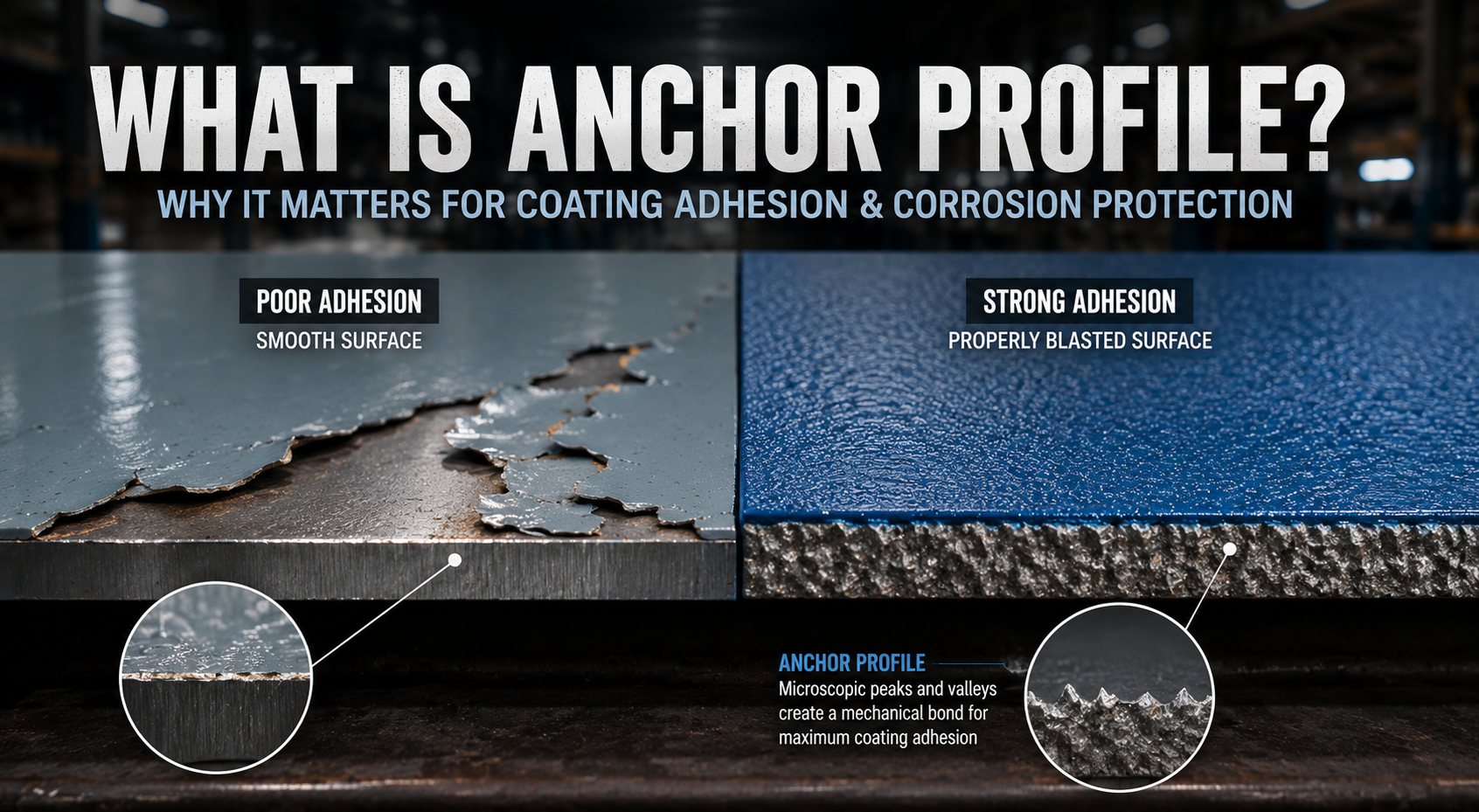
Cleanliness is important, but anchor profile must also be controlled properly.
A perfectly clean surface with an incorrect profile can still experience coating failures.
The relationship between Sa standards and anchor profile
A common misconception is that Sa standards define surface roughness.
They do not.
Sa standards define cleanliness only.
Anchor profile depends on:
- Abrasive type
- Abrasive size
- Abrasive hardness
- Blasting parameters
For optimal coating performance, both cleanliness and profile requirements must be achieved.
At SPT Blastech, we always recommend evaluating cleanliness and profile together rather than treating them as separate quality requirements.
Why proper blasting standards reduce long-term costs
Many companies focus on blasting cost rather than lifecycle cost.
However, inadequate surface preparation often results in:
- Coating failure
- Rework expenses
- Corrosion repairs
- Production downtime
- Asset replacement costs
Investing in the correct blasting standard helps:
- Extend coating life
- Improve corrosion resistance
- Reduce maintenance frequency
- Improve asset reliability
The cost of proper surface preparation is usually far lower than the cost of coating failure.
Frequently asked questions
Which blasting standard is most commonly specified?
Sa 2.5 is the most commonly specified standard for industrial coating applications.
Is Sa 3 always better than Sa 2.5?
Not necessarily. While Sa 3 provides higher cleanliness, many applications achieve excellent performance with Sa 2.5 at a lower cost.
Can coatings fail even when Sa standards are met?
Yes. Coating failure can still occur if anchor profile, contamination control, environmental conditions, or coating application procedures are not managed properly.
Why is Sa 2.5 preferred for structural steel?
Sa 2.5 provides excellent coating adhesion and corrosion resistance while maintaining practical production efficiency and cost control.
Do Sa standards specify surface roughness?
No. Sa standards define cleanliness levels only. Surface roughness is controlled separately through anchor profile requirements.
Final takeaway
Sa 2, Sa 2.5, and Sa 3 are not simply technical specifications. They are critical decisions that influence coating adhesion, corrosion resistance, maintenance costs, and asset life.
For most industrial applications, Sa 2.5 provides the ideal balance between performance and cost. However, severe environments may justify Sa 3, while less demanding applications may perform adequately with Sa 2.
Selecting the correct standard ensures coating systems perform as intended and helps prevent costly failures in the future.
Need help choosing the right blasting standard?
Selecting the wrong surface preparation standard can compromise coating performance and increase maintenance costs for years.
At SPT Blastech, we help manufacturers evaluate:
- Surface preparation requirements
- Coating specifications
- Corrosion exposure conditions
- Anchor profile requirements
- Blasting process optimization
Our experts can help ensure your project achieves the right balance between quality, durability, and cost.
Contact SPT Blastech today to discuss your surface preparation requirements and identify the most suitable blasting standard for your application.