Corrosion protection starts before coating
Corrosion is one of the most expensive challenges facing steel fabrication, infrastructure, manufacturing, and heavy industry. While coating systems are designed to protect steel from moisture and environmental attack, coating performance depends heavily on the condition of the surface beneath it.
Many organizations focus on selecting premium coatings but overlook the preparation stage. In reality, even the best coating system can fail prematurely if applied to an inadequately prepared surface. This is where shot blasting becomes critical.
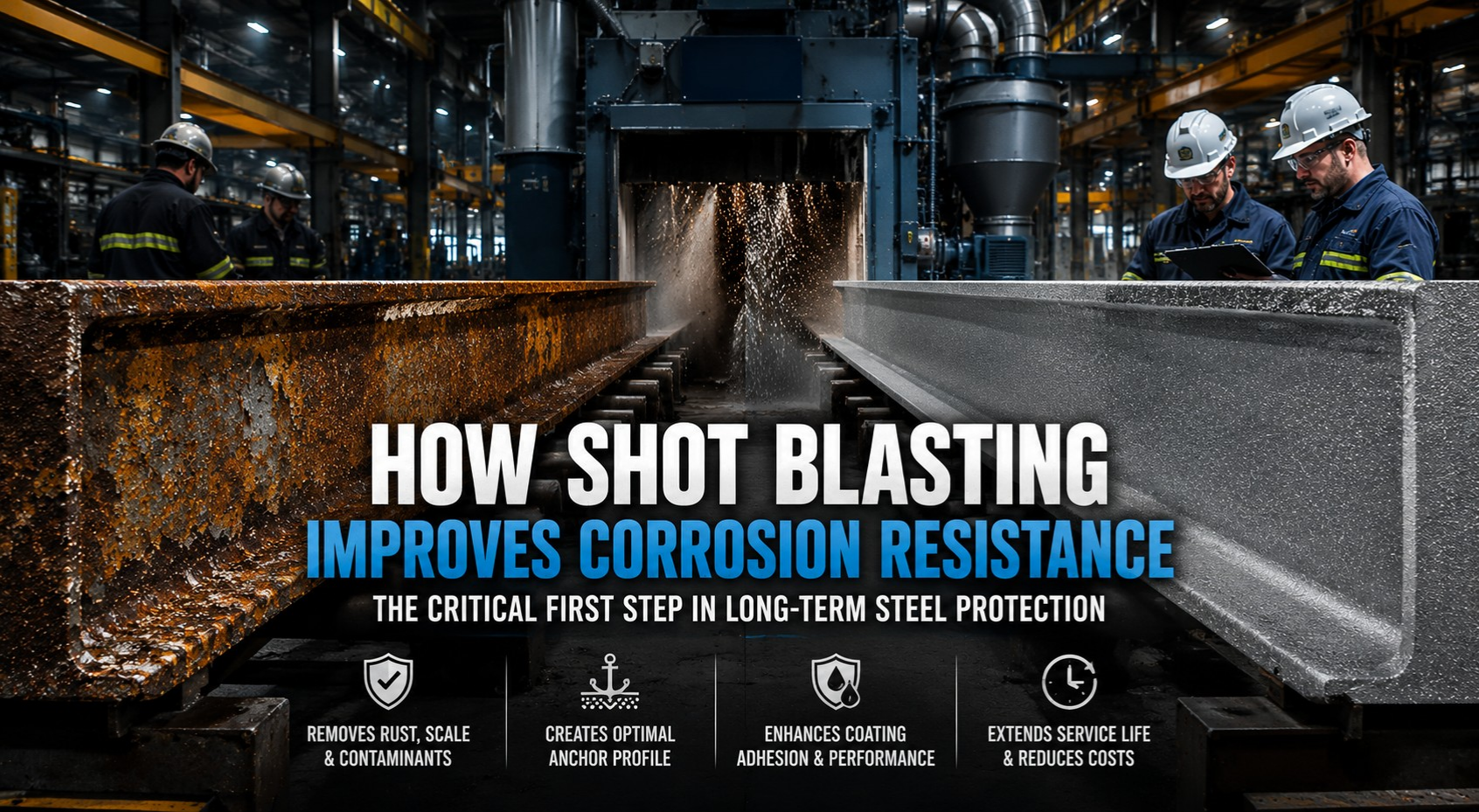
Shot blasting creates the foundation for long-term corrosion resistance by removing contaminants, generating the correct surface profile, and improving coating adhesion.
Why steel corrodes
Steel naturally reacts with oxygen and moisture. When exposed to environmental conditions, oxidation begins and eventually forms rust.
Several factors accelerate corrosion:
- Humidity and moisture exposure
- Industrial pollutants
- Salt contamination
- Chemical exposure
- Temperature fluctuations
- Poor coating adhesion
Once corrosion begins beneath a coating system, damage can spread rapidly and become difficult to detect until significant deterioration occurs.
Surface contamination is a major corrosion risk
Before coating application, steel surfaces often contain:
- Rust
- Mill scale
- Welding residue
- Dust and dirt
- Oil and grease
- Previous coating remnants
These contaminants prevent coatings from bonding directly to the steel surface. Instead, the coating adheres to contamination layers that eventually separate from the substrate.
As moisture penetrates these weak areas, corrosion begins underneath the coating film.
How shot blasting removes corrosion initiators
Shot blasting uses high-velocity abrasive media to clean steel surfaces thoroughly.
The process removes:
- Existing rust
- Mill scale
- Oxidation
- Surface contaminants
- Old coating residues
This exposes clean base metal and creates a uniform surface condition for coating application.
Unlike manual cleaning methods, shot blasting provides consistent cleaning across large surfaces and complex geometries.
Surface profile improves coating adhesion
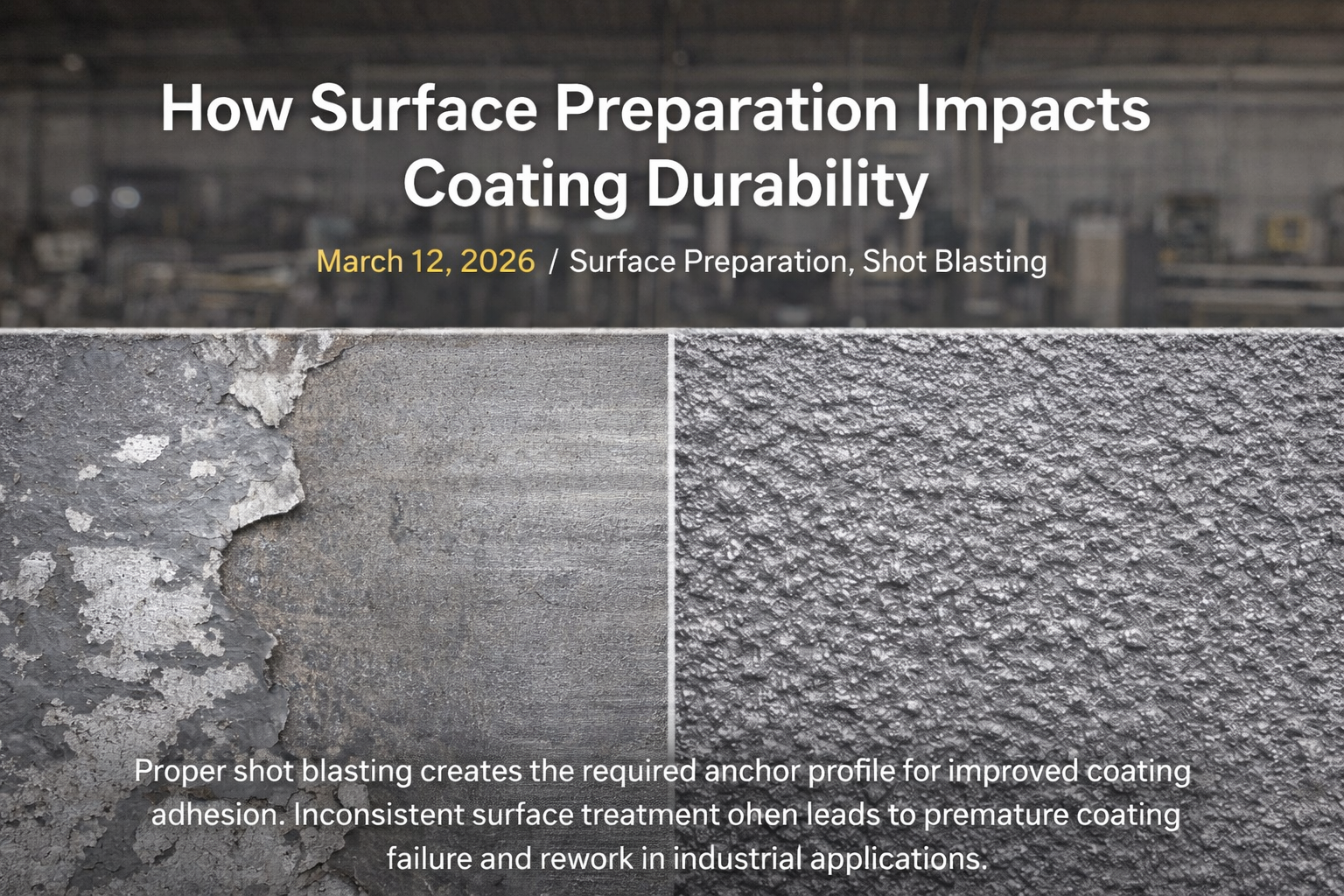
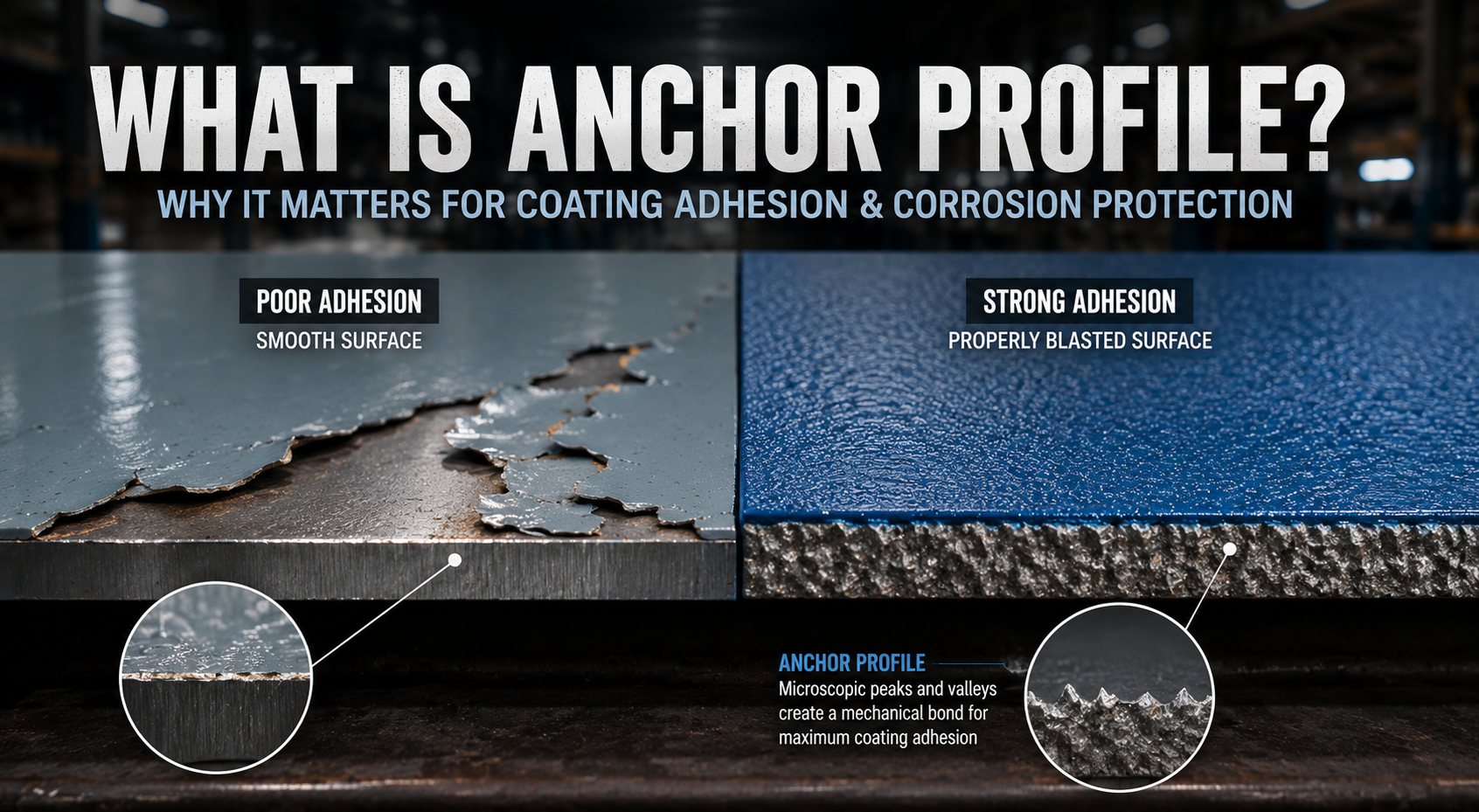
Cleaning alone is not enough. Coatings also require mechanical adhesion to remain durable under service conditions.
Shot blasting creates a controlled anchor profile consisting of microscopic peaks and valleys across the steel surface.
This profile allows coatings to:
- Mechanically lock into the surface
- Improve bond strength
- Resist peeling and delamination
- Maintain long-term protection
Without adequate profile, coatings may appear acceptable initially but often fail prematurely when exposed to environmental stress.
Better adhesion means better corrosion resistance
Corrosion protection depends on maintaining an uninterrupted barrier between steel and the environment.
When coating adhesion is strong:
- Moisture penetration decreases
- Underfilm corrosion risk reduces
- Edge protection improves
- Coating lifespan increases
A properly blasted surface enables coatings to perform according to their intended design life.
This is one of the primary reasons shot blasting is specified in infrastructure, bridge construction, heavy fabrication, shipbuilding, and industrial manufacturing projects.
Consistency matters in large-scale projects
Large steel structures often contain:
- Welded assemblies
- Structural sections
- Plates
- Beams
- Fabricated components
Surface condition can vary significantly across these areas.
Shot blasting systems provide process consistency by delivering controlled cleaning and profile generation across the entire workpiece. This consistency helps ensure predictable coating performance throughout the structure.
The role of dust extraction and abrasive quality
Effective corrosion protection depends on more than blasting alone.
Dust extraction systems help:
- Remove contaminants from the blasting chamber
- Maintain abrasive quality
- Improve process visibility
- Reduce dust residue before coating
Likewise, properly maintained abrasive media ensures consistent cleaning effectiveness and profile development.
When blasting and dust extraction work together, surface preparation quality becomes more reliable.
Common mistakes that reduce corrosion resistance
Even after blasting, several mistakes can compromise coating performance:
- Delayed coating after blasting
- Surface recontamination during handling
- Excessive humidity exposure
- Poor dust removal before painting
- Incorrect coating application
Freshly blasted steel should be protected as quickly as possible to minimize oxidation risk.
Industries that benefit from shot blasting
Shot blasting plays an important role in corrosion prevention across numerous industries:
- Structural steel fabrication
- Infrastructure projects
- Bridge construction
- Rail manufacturing
- Oil and gas facilities
- Power generation plants
- Industrial equipment manufacturing
In each case, long-term asset protection depends heavily on surface preparation quality.
Economic impact of corrosion prevention
Corrosion-related failures create significant costs through:
- Maintenance shutdowns
- Repainting projects
- Structural repairs
- Asset replacement
- Production interruptions
Investing in proper shot blasting and surface preparation reduces these risks while extending coating service life.
For many organizations, the cost of quality surface preparation is substantially lower than the cost of premature coating failure.
Best practices for maximum corrosion resistance
To achieve reliable corrosion protection:
- Remove rust, scale, and contaminants completely
- Maintain consistent blasting parameters
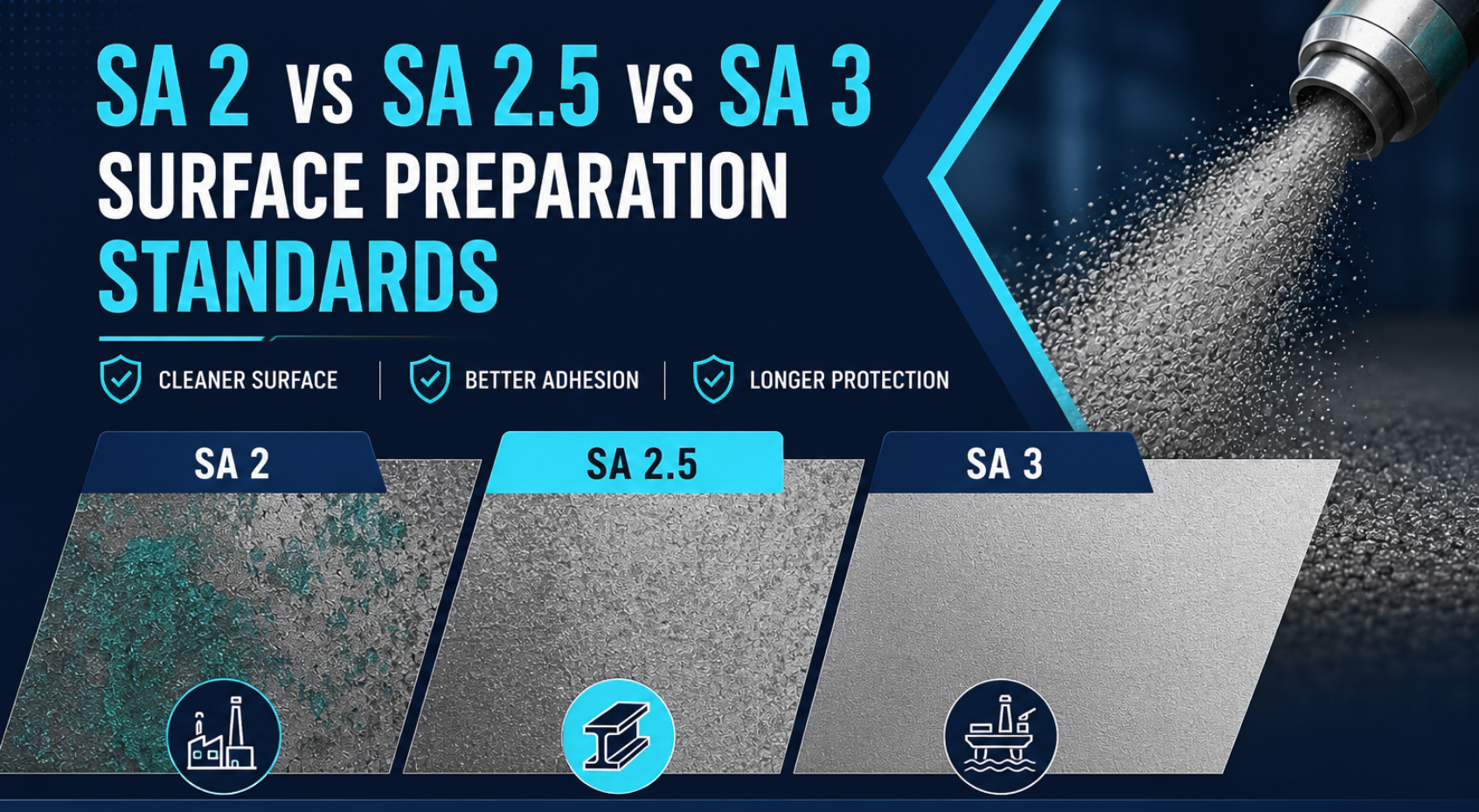
- Verify surface profile requirements
- Control dust and cleanliness before coating
- Minimize delay between blasting and painting
- Follow coating specifications carefully
These practices help create a durable protective system that performs effectively in demanding environments.
Final takeaway
Shot blasting is not simply a cleaning process. It is a critical step in corrosion prevention.
By removing contaminants, creating the correct anchor profile, and supporting strong coating adhesion, shot blasting significantly improves the ability of coatings to protect steel structures from environmental attack.
Organizations seeking longer coating life, lower maintenance costs, and improved asset reliability should treat surface preparation as a strategic part of their corrosion protection program rather than a preliminary production step.