Coating performance begins with the surface beneath it
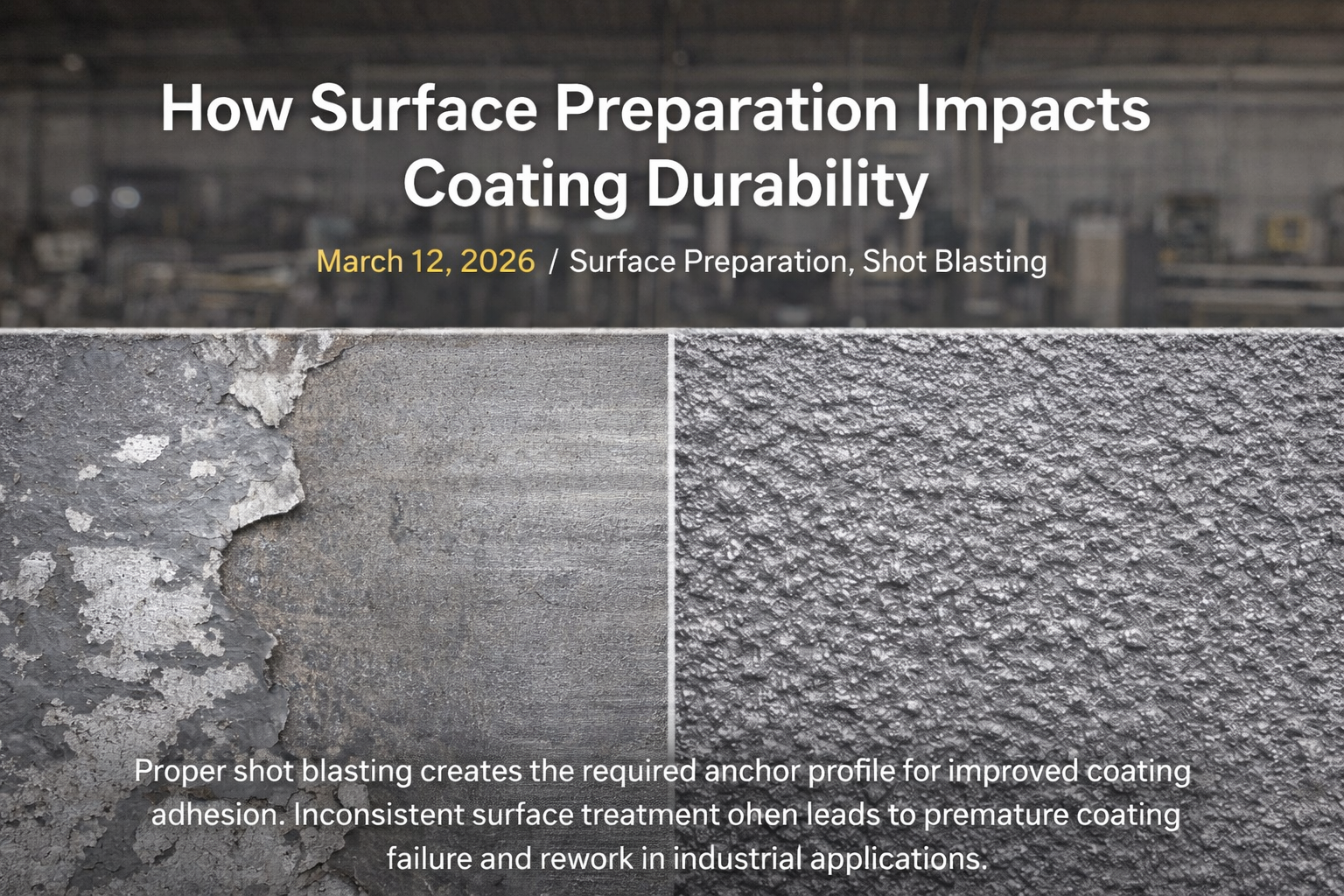
Industrial coatings are designed to protect steel from corrosion, moisture, chemicals, and environmental exposure. However, even the highest-quality coating systems can fail prematurely if the underlying surface is not prepared correctly.
One of the most important factors in surface preparation is anchor profile. While coatings receive significant attention during project planning, anchor profile often receives far less consideration despite having a direct impact on adhesion and long-term performance.
A properly developed anchor profile helps coatings bond effectively to the substrate, while an incorrect profile can lead to premature coating failure, increased maintenance costs, and reduced asset life.
What is anchor profile?
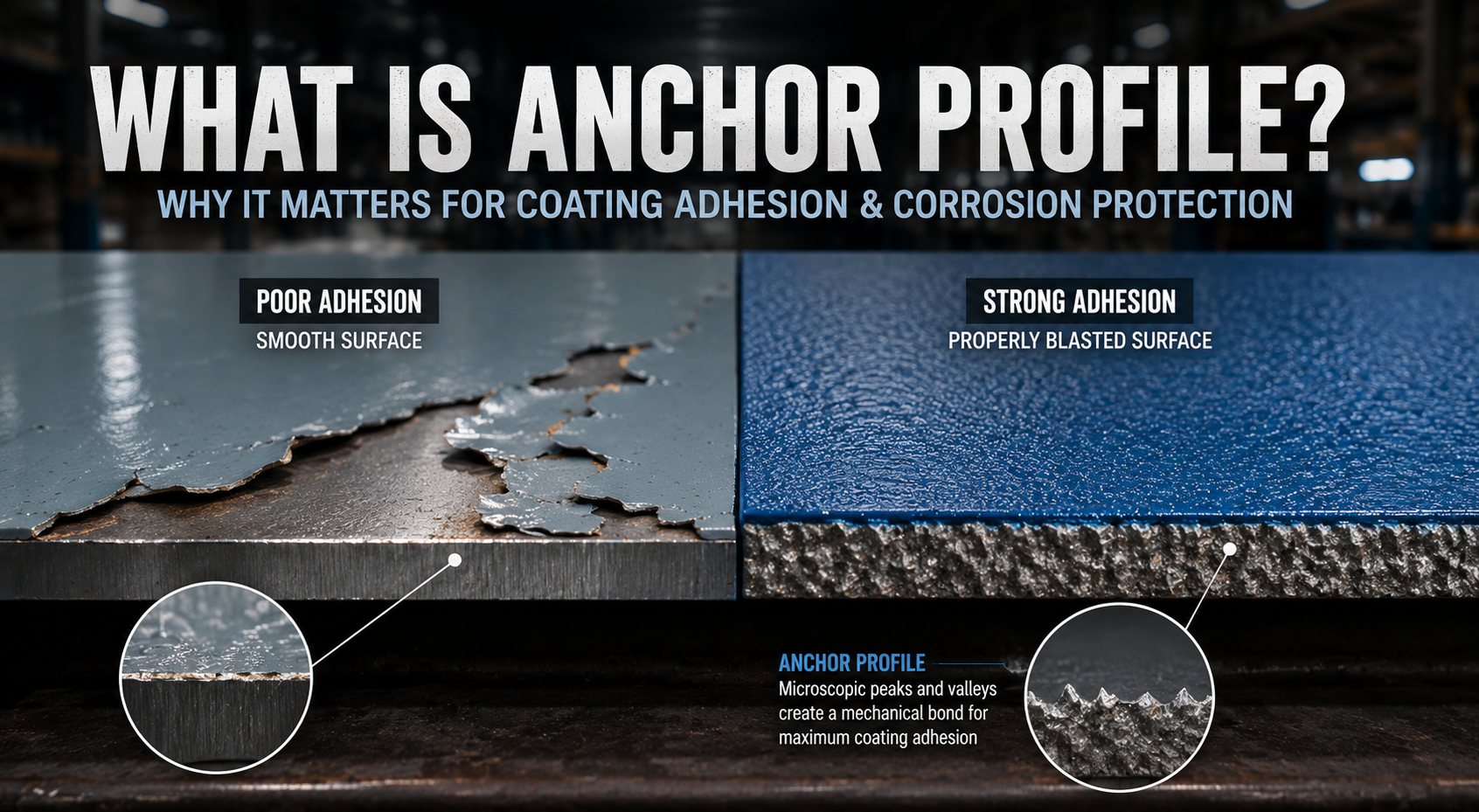
Anchor profile refers to the microscopic roughness created on a metal surface during abrasive blasting.
When abrasive particles strike the steel surface, they create tiny peaks and valleys. These surface irregularities form a texture that allows coatings to mechanically grip the substrate.
Unlike a smooth polished surface, a properly blasted surface provides thousands of microscopic contact points where the coating can lock into the metal.
This mechanical bond is one of the primary reasons blasting is widely used before painting and coating operations.
How is anchor profile created?
Anchor profile is typically generated through shot blasting or abrasive blasting processes.
Several factors influence profile development:
- Abrasive type
- Abrasive size
- Abrasive hardness
- Impact velocity
- Blast angle
- Surface condition
Different combinations of these variables produce different profile depths and surface textures.
The objective is not simply to create the roughest possible surface. Instead, the goal is to create a profile that matches the coating system requirements.
Why does anchor profile matter for coating adhesion?
Coatings require a stable surface to achieve maximum performance.
A properly developed anchor profile provides:
- Improved mechanical bonding
- Greater coating adhesion
- Better resistance to peeling
- Enhanced durability
- Improved resistance to environmental exposure
Without adequate profile, coatings may initially appear acceptable but often fail when exposed to service conditions such as moisture, temperature changes, vibration, or chemical attack.
What happens when the profile is too shallow?
A shallow profile creates limited surface area for the coating to grip.
Potential problems include:
- Reduced adhesion strength
- Early coating delamination
- Peeling and flaking
- Increased corrosion risk
- Reduced coating life
This is a common issue when blasting intensity is insufficient or when worn abrasive media is used.
What happens when the profile is too deep?
Many people assume a deeper profile automatically improves performance. In reality, excessive profile can create its own challenges.
Common issues include:
- Increased paint consumption
- Difficulty achieving uniform coating thickness
- Incomplete coverage of deep valleys
- Higher material costs
- Potential coating weak points
The best results come from achieving the profile specified by the coating manufacturer rather than maximizing roughness.
Anchor profile and corrosion protection
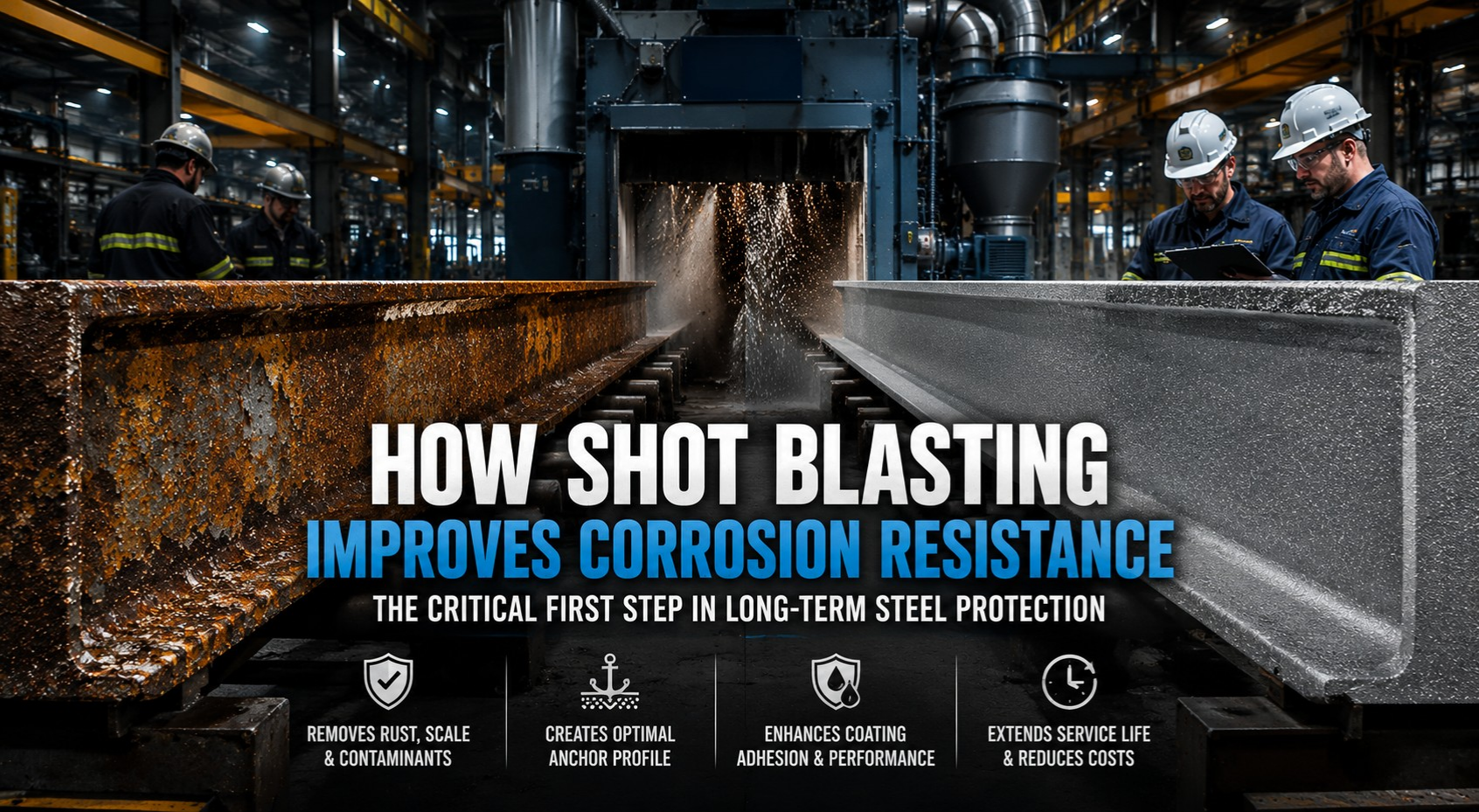
Coating adhesion and corrosion protection are closely connected.
When coatings maintain strong adhesion:
- Moisture penetration decreases
- Underfilm corrosion is reduced
- Protective performance improves
- Maintenance intervals become longer
A properly prepared profile helps maintain the protective barrier between steel and the surrounding environment.
For this reason, anchor profile is considered a critical factor in corrosion prevention strategies.
Factors that influence profile consistency
Creating the correct profile once is not enough. Consistency across the entire surface is equally important.
Variables affecting profile consistency include:
- Abrasive quality
- Media contamination
- Blast wheel condition
- Nozzle wear
- Exposure time
- Part orientation
- Dust extraction performance
Variation in any of these factors can create uneven surface conditions that affect coating performance.
Measuring anchor profile
Industrial facilities commonly measure anchor profile during quality inspections.
Measurement methods may include:
- Replica tape
- Surface profile gauges
- Digital measuring instruments
Regular measurement helps verify that blasting processes are achieving specification requirements.
Inspection should be performed at multiple locations rather than relying on a single measurement point.
Common mistakes that affect anchor profile
Several mistakes can compromise profile quality:
- Using incorrect abrasive media
- Operating with worn blasting components
- Poor abrasive separation
- Excessive media contamination
- Inconsistent blasting parameters
- Insufficient inspection
These issues often lead to coating problems that become visible only after the structure enters service.
Industries where anchor profile is critical
Anchor profile plays an important role in:
- Structural steel fabrication
- Bridge construction
- Oil and gas facilities
- Power generation plants
- Shipbuilding
- Heavy engineering
- Industrial equipment manufacturing
In these industries, coating failure can result in significant maintenance and repair costs.
Best practices for achieving the right anchor profile
Organizations seeking reliable coating performance should:
- Use the correct abrasive media
- Maintain blasting equipment properly
- Verify profile measurements regularly
- Control contamination sources
- Follow coating specifications
- Train operators on profile requirements
These practices help create repeatable blasting results and improve coating reliability.
Final takeaway
Anchor profile is one of the most important yet often overlooked aspects of surface preparation. It provides the mechanical foundation that allows coatings to bond effectively to steel surfaces.
When profile depth and consistency are properly controlled, coating adhesion improves, corrosion resistance increases, and long-term maintenance costs decrease.
For organizations focused on coating performance and asset protection, achieving the correct anchor profile should be considered a critical quality requirement rather than a routine blasting outcome.