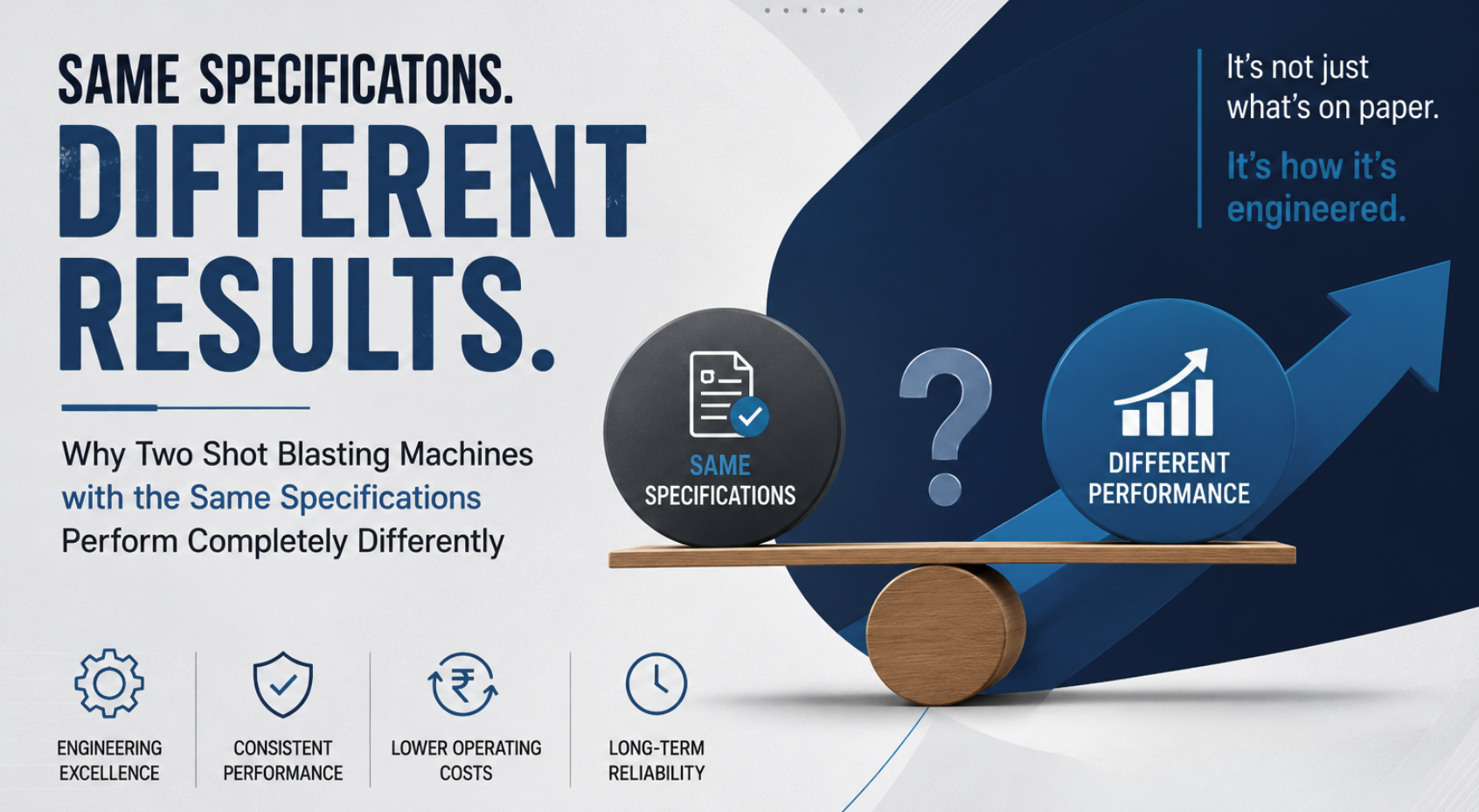
Same specifications. Different results. Here's why.
Imagine receiving quotations from two different shot blasting machine manufacturers.
Both machines appear almost identical.
- 4 Blast Wheels
- 15 HP Motors
- Similar Chamber Size
- Same Production Capacity
- Similar Abrasive Consumption
- Similar Overall Dimensions
Yet one machine costs considerably less than the other.
Naturally, many buyers ask:
"If the specifications are the same, why should I pay more?"
It's a fair question.
But specifications only tell part of the story.
In reality, two machines with nearly identical technical specifications can perform very differently over the next 10–20 years. The difference lies not in what is written on the quotation—but in how the machine has been engineered.
Specifications don't reveal engineering quality
Most buyers compare machines using a specification sheet.
While specifications are important, they rarely explain how efficiently a machine will perform in real production conditions.
Items such as motor power, blast wheel quantity, chamber dimensions, and conveyor speed provide only a basic overview.
They don't reveal:
- Cleaning consistency
- Abrasive recovery efficiency
- Wear life
- Maintenance requirements
- Energy efficiency
- Ease of servicing
- Long-term operating cost
These factors often determine whether a machine becomes a productive investment or an expensive maintenance burden.
Blast wheel positioning matters as much as the number of blast wheels
Many buyers compare machines based on the number of blast wheels.
However, simply increasing the number of wheels does not automatically improve cleaning quality.
The position, angle, overlap, and throwing pattern of each blast wheel determine how effectively abrasive reaches every surface of the workpiece.
A well-engineered four-wheel machine can often outperform a poorly designed six-wheel machine.
Proper blast wheel placement minimizes shadow areas, improves cleaning consistency, and reduces unnecessary abrasive consumption.
Machine construction influences long-term durability
The overall strength of a shot blasting machine depends on much more than its external appearance.
Factors such as steel thickness, structural reinforcement, welding quality, and fabrication accuracy directly affect machine life.
Machines built with stronger fabricated structures generally experience less vibration, improved stability, and longer service life under continuous industrial operation.
These details are rarely visible in a quotation but become evident after years of production.
Wear protection makes a significant difference
Inside every shot blasting chamber, abrasive continuously impacts machine surfaces.
Without adequate wear-resistant liners, critical components begin deteriorating much faster.
Premium machines are designed with strategically placed wear liners that protect high-impact areas.
This not only extends equipment life but also reduces maintenance frequency and replacement costs.
Abrasive recovery efficiency affects operating costs
Abrasive media represents one of the largest recurring operating expenses.
An efficient abrasive recovery system ensures reusable media is returned to the blasting process while broken particles and contaminants are removed.
Poor recovery system design can result in:
- Higher abrasive consumption
- Increased dust
- Reduced cleaning efficiency
- Higher operating costs
Over several years, these additional expenses can far exceed the initial purchase price difference.
Separator performance influences blasting quality
The separator is responsible for cleaning and classifying abrasive before it is reused.
If separation efficiency is poor, contaminated abrasive continues circulating through the system.
This reduces blasting quality and accelerates wear on machine components.
A properly designed separator contributes to consistent cleaning performance throughout the machine's life.
Dust collection is more than workplace cleanliness
Many people view the dust collector simply as an environmental accessory.
In reality, it is an essential part of the blasting process.
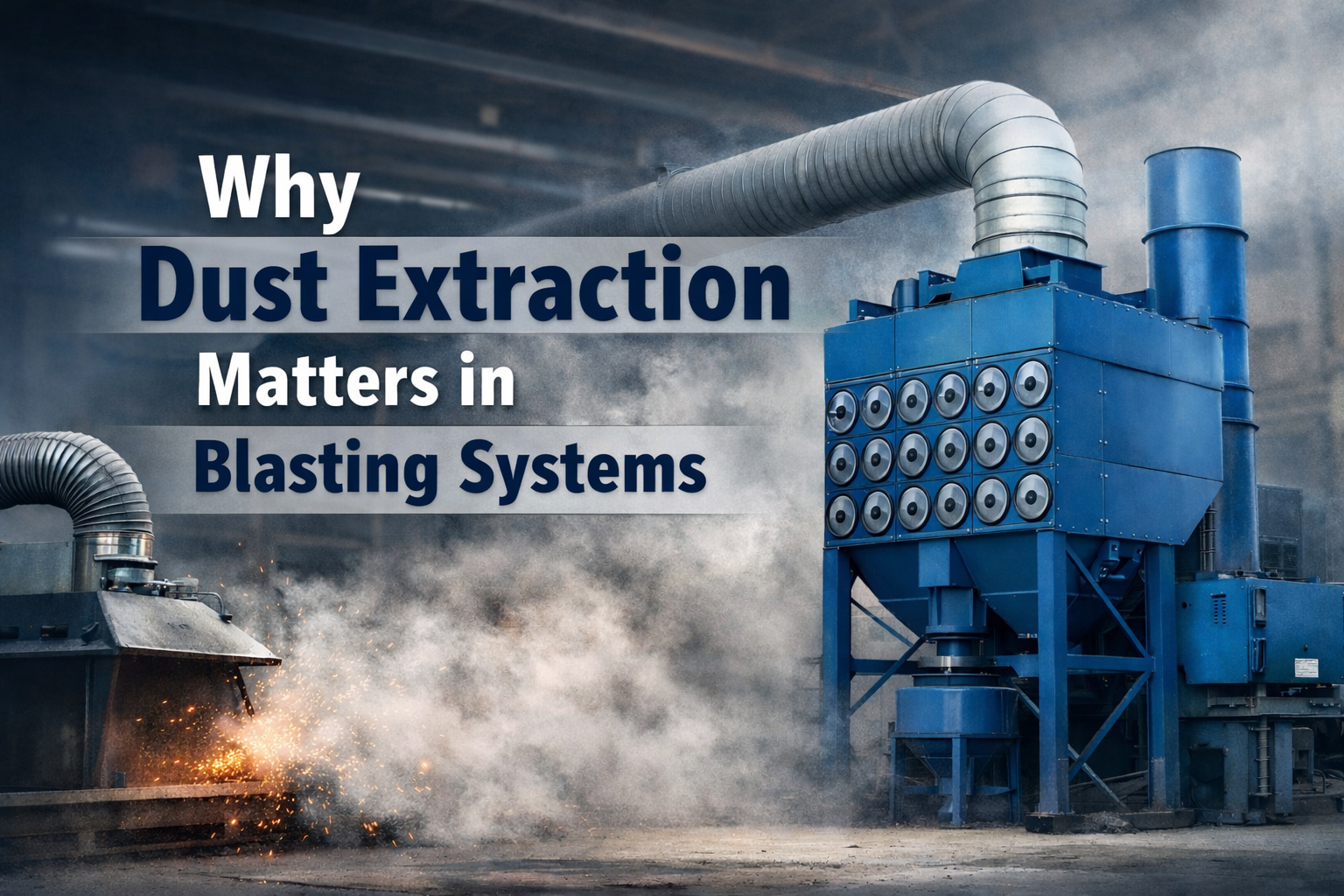
Efficient dust extraction helps maintain clean abrasive, improves separator performance, enhances visibility, and supports consistent surface preparation.
An undersized or poorly designed dust collection system can reduce overall machine efficiency.
Maintenance accessibility matters every day
A machine may perform well initially, but difficult maintenance procedures increase downtime throughout its service life.
Features such as easy access to blast wheels, liners, filters, conveyors, and inspection doors reduce maintenance time and improve productivity.
Service-friendly design is often overlooked during purchasing but appreciated throughout years of operation.
Automation and control systems improve consistency
Modern shot blasting machines rely on intelligent control systems to improve process stability.
Automation helps maintain consistent blasting parameters while reducing operator dependency.
Well-designed control systems also simplify diagnostics, maintenance scheduling, and overall machine management.
The true cost isn't the purchase price
A lower purchase price can appear attractive during procurement.
However, buyers should also evaluate:
- Energy consumption
- Abrasive usage
- Maintenance expenses
- Spare part availability
- Production downtime
- Machine lifespan
- Technical support
The total cost of ownership often provides a much more accurate comparison than the initial quotation.
Questions every buyer should ask
Before selecting a shot blasting machine supplier, consider asking:
- How is blast wheel positioning optimized?
- Which wear-resistant materials are used?
- How efficient is the abrasive recovery system?
- What separator design is included?
- How accessible are wear components?
- What level of after-sales support is provided?
- What preventive maintenance is recommended?
- What is the expected service life of critical components?
The answers often reveal far more than the specification sheet itself.
Final takeaway
Two shot blasting machines may appear identical on paper, but engineering quality determines how they perform in the real world.
Factors such as blast wheel placement, machine construction, abrasive recovery, wear protection, dust collection, and serviceability all influence productivity, operating costs, and long-term reliability.
When comparing quotations, look beyond specifications.
A well-engineered machine may require a higher initial investment, but it often delivers lower operating costs, greater reliability, and better return on investment throughout its service life.
Looking for a shot blasting machine engineered for long-term performance?
At SPT Blastech™, we believe a specification sheet tells only part of the story.
Our machines are designed with application-focused engineering, durable construction, efficient abrasive recovery systems, and dependable after-sales support to help manufacturers achieve consistent surface preparation and maximum productivity.
Whether you're comparing quotations or planning a new surface preparation line, our team can help you choose the right solution based on your production requirements—not just technical specifications.
Contact SPT Blastech today to discuss your application and discover what truly makes a shot blasting machine perform better over the long term.