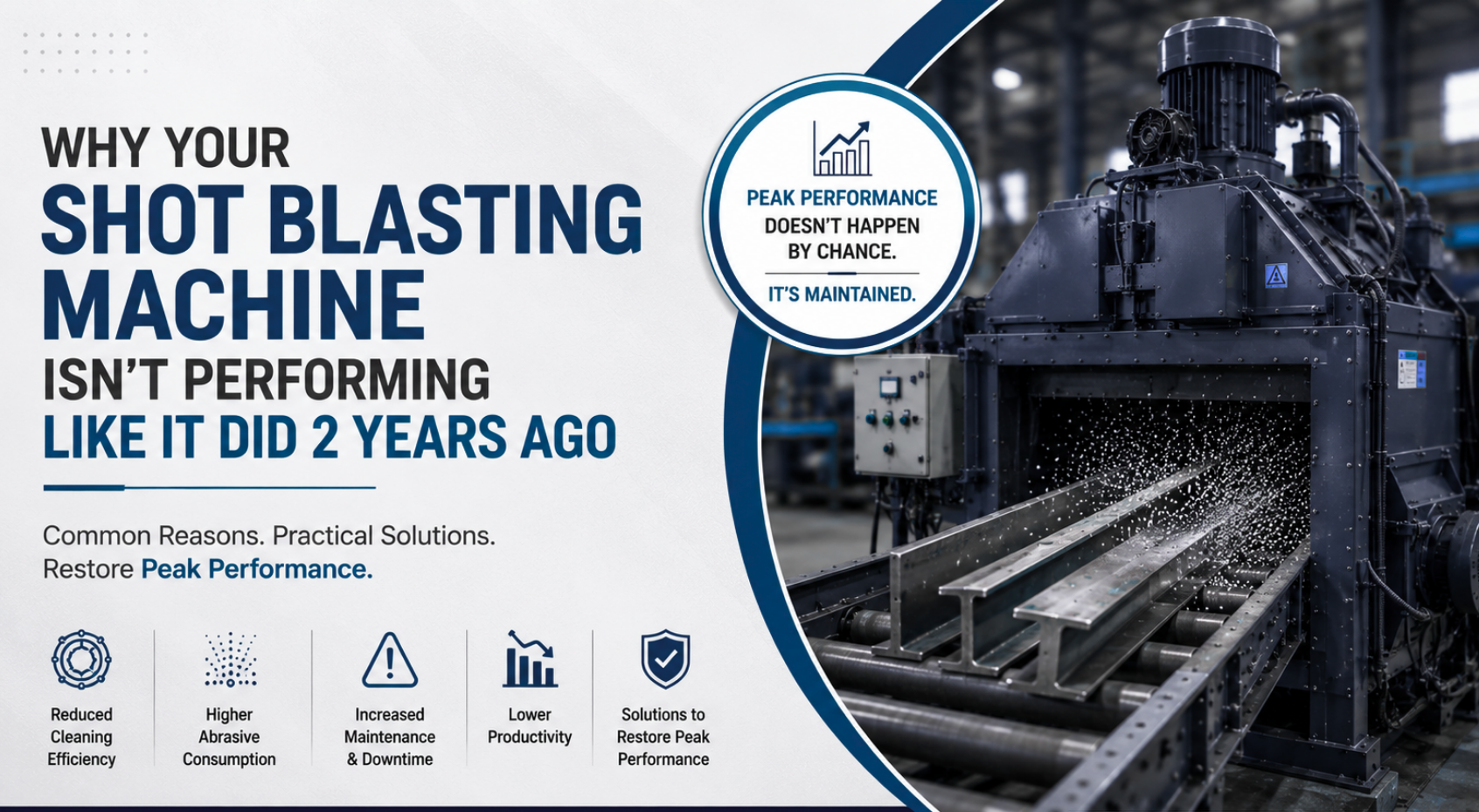
The machine hasn't changed overnight—but its performance probably has.
When a new shot blasting machine is installed, production is smooth. Components are cleaned efficiently, abrasive consumption remains under control, and coating preparation meets quality standards.
Fast forward two or three years, and many manufacturers begin noticing subtle changes.
Cleaning takes longer.
Surface finish becomes inconsistent.
More abrasive is required to achieve the same result.
Maintenance costs begin increasing.
Most people assume the machine is simply getting old.
In reality, the machine is often not the problem.
Performance usually declines because of gradual wear, overlooked maintenance, improper operating practices, and reduced system efficiency. The good news is that most of these issues can be corrected before they become expensive.
Every shot blasting machine experiences wear
Shot blasting is one of the harshest industrial processes.
Every minute, thousands of abrasive particles travel at high velocity through the machine. Blast wheels, liners, separators, conveyors, and recovery systems are continuously exposed to impact and abrasion.
Although these components are designed for durability, they naturally wear over time.
Without regular inspection and maintenance, this wear slowly affects the machine's overall performance.
The decline is often so gradual that operators don't notice it until productivity starts dropping.
Worn blast wheel components reduce cleaning efficiency
The blast wheel is the heart of every shot blasting machine.
As blades, control cages, impellers, and distribution sleeves wear, the abrasive is no longer projected with the same efficiency.
Instead of striking the workpiece at the correct angle and velocity, the abrasive loses impact energy.
The result is slower cleaning, uneven surface preparation, and higher abrasive consumption.
Many facilities continue operating with worn blast wheel components because the machine still appears functional.
However, replacing these wear parts at the right time can significantly improve blasting performance.
Abrasive quality changes over time
Not every performance issue originates inside the machine.
Abrasive media also changes as it is reused.
Steel shot gradually breaks into smaller particles. Dust levels increase. Contamination builds up.
As the quality of the abrasive declines, cleaning efficiency decreases.
Manufacturers often compensate by increasing blasting time or adding more abrasive, but this only increases operating costs.
Maintaining proper abrasive quality is just as important as maintaining the machine itself.
Separator efficiency affects the entire blasting process
The abrasive separator has one important responsibility—separating reusable abrasive from broken media, dust, and contaminants.
If the separator is not adjusted correctly, usable abrasive may be discarded while damaged media continues circulating through the system.
This leads to:
- Higher abrasive consumption
- Poor cleaning consistency
- Increased dust generation
- Reduced blasting efficiency
A simple separator adjustment can often restore performance that has gradually declined over time.
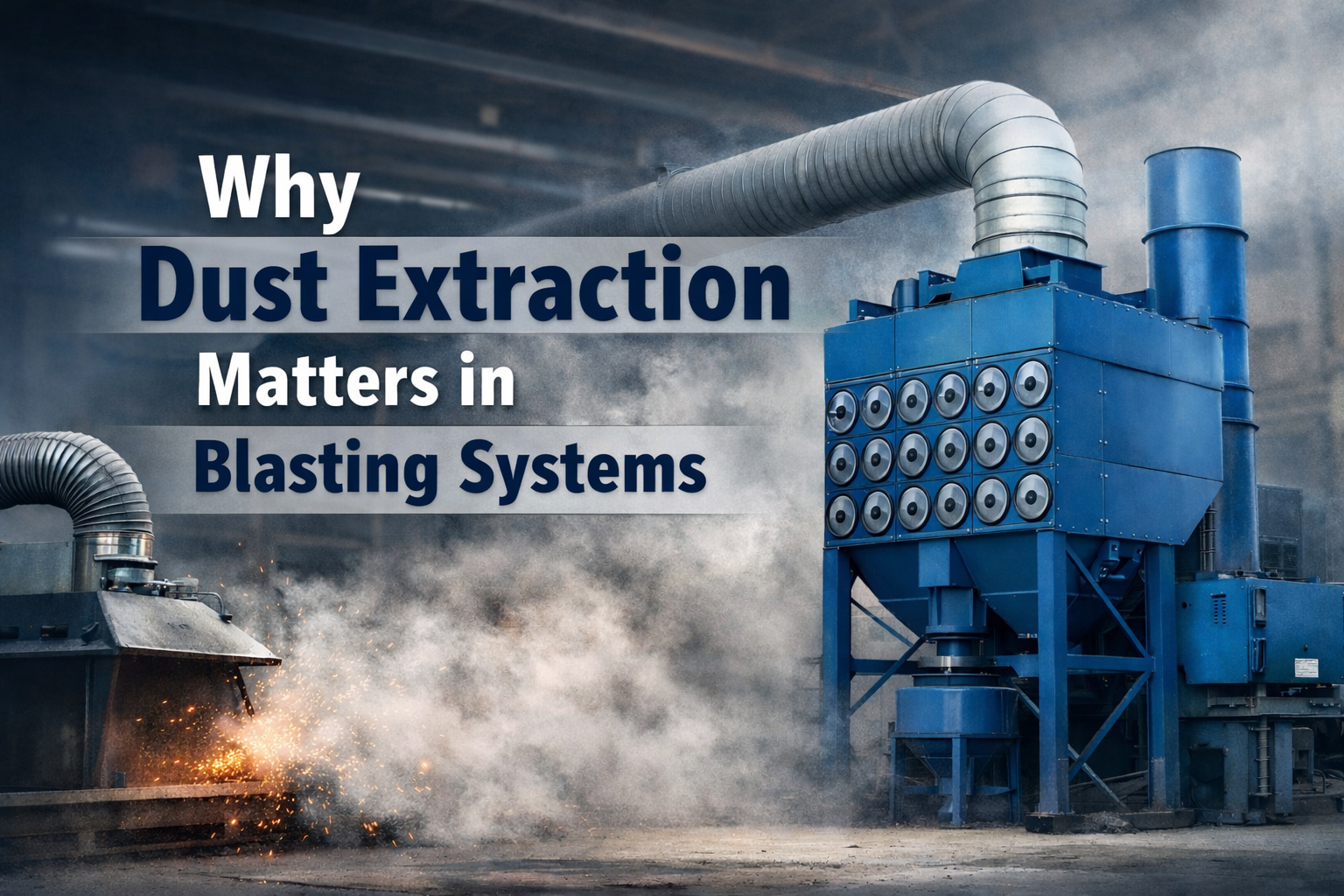
Dust collection plays a bigger role than most people realize
Many operators think the dust collector only improves workplace cleanliness.
In reality, it directly influences blasting quality.
A poorly maintained dust collection system allows excessive dust to remain in circulation.
This affects abrasive recovery, reduces separator efficiency, and contaminates the blasting process.
Regular filter maintenance and airflow inspection help maintain both machine performance and abrasive quality.
Small maintenance delays become expensive problems
One delayed inspection rarely causes major issues.
However, several months of postponed maintenance can significantly reduce machine performance.
Common examples include:
- Worn chamber liners
- Damaged seals
- Loose fasteners
- Conveyor wear
- Misaligned blast wheels
- Blocked recovery systems
Individually, these issues seem minor.
Together, they can reduce productivity while increasing operating costs.
Operating conditions also change
Sometimes the machine performs differently because production has changed.
Many factories gradually begin processing:
- Larger components
- Different steel grades
- Higher production volumes
- More complex fabricated structures
Although the machine hasn't changed, the workload has.
Operating parameters may need adjustment to match current production requirements.
Performance should be measured—not guessed
One of the biggest mistakes manufacturers make is relying only on operator experience.
Instead, key performance indicators should be monitored regularly.
These include:
- Abrasive consumption
- Cleaning cycle time
- Production output
- Power consumption
- Surface preparation quality
- Maintenance frequency
Tracking these values helps identify performance changes long before they become serious problems.
Warning signs your machine needs attention
Several symptoms indicate that a shot blasting machine is no longer operating at peak efficiency.
Watch for:
- Longer cleaning times
- Uneven surface finish
- Increased abrasive consumption
- Higher power usage
- More frequent maintenance
- Dust escaping from the machine
- Reduced production output
- Coating quality issues
Ignoring these warning signs usually leads to higher repair costs later.
Preventive maintenance is always less expensive than breakdowns
Many companies invest heavily in repairs only after production problems appear.
A preventive maintenance program helps identify wear before it affects productivity.
Regular inspections, timely replacement of wear parts, proper abrasive management, and equipment calibration help maintain consistent blasting performance throughout the machine's service life.
The cost of preventive maintenance is almost always lower than the cost of production downtime.
When should you consider upgrading?
Not every performance issue requires a new machine.
In many cases, restoring the existing machine through proper maintenance provides excellent results.
However, an upgrade may be worth considering if:
- Production volume has doubled
- Maintenance costs continue rising
- Downtime affects delivery schedules
- Existing technology no longer meets production demands
- Automation requirements have increased
A technical evaluation can help determine whether refurbishment or replacement offers the better return on investment.
Final takeaway
A shot blasting machine does not suddenly become inefficient after two years.
Performance declines gradually through normal wear, changing abrasive quality, maintenance delays, and evolving production requirements.
The earlier these issues are identified, the easier—and less expensive—they are to correct.
With regular inspections, preventive maintenance, and proper process optimization, manufacturers can restore efficiency, improve surface quality, reduce operating costs, and significantly extend the service life of their equipment.
Is your shot blasting machine delivering the performance it should?
If you've noticed slower cleaning, higher abrasive consumption, inconsistent surface quality, or increasing maintenance costs, your machine may simply need a professional performance evaluation.
At SPT Blastech™, we help manufacturers identify the root causes of declining blasting performance through machine inspections, process optimization, maintenance recommendations, and technical support.
Whether your goal is restoring efficiency or planning a future upgrade, our experts can help you maximize the performance and lifespan of your shot blasting system.
Contact SPT Blastech today to schedule a technical assessment and bring your shot blasting machine back to peak performance.