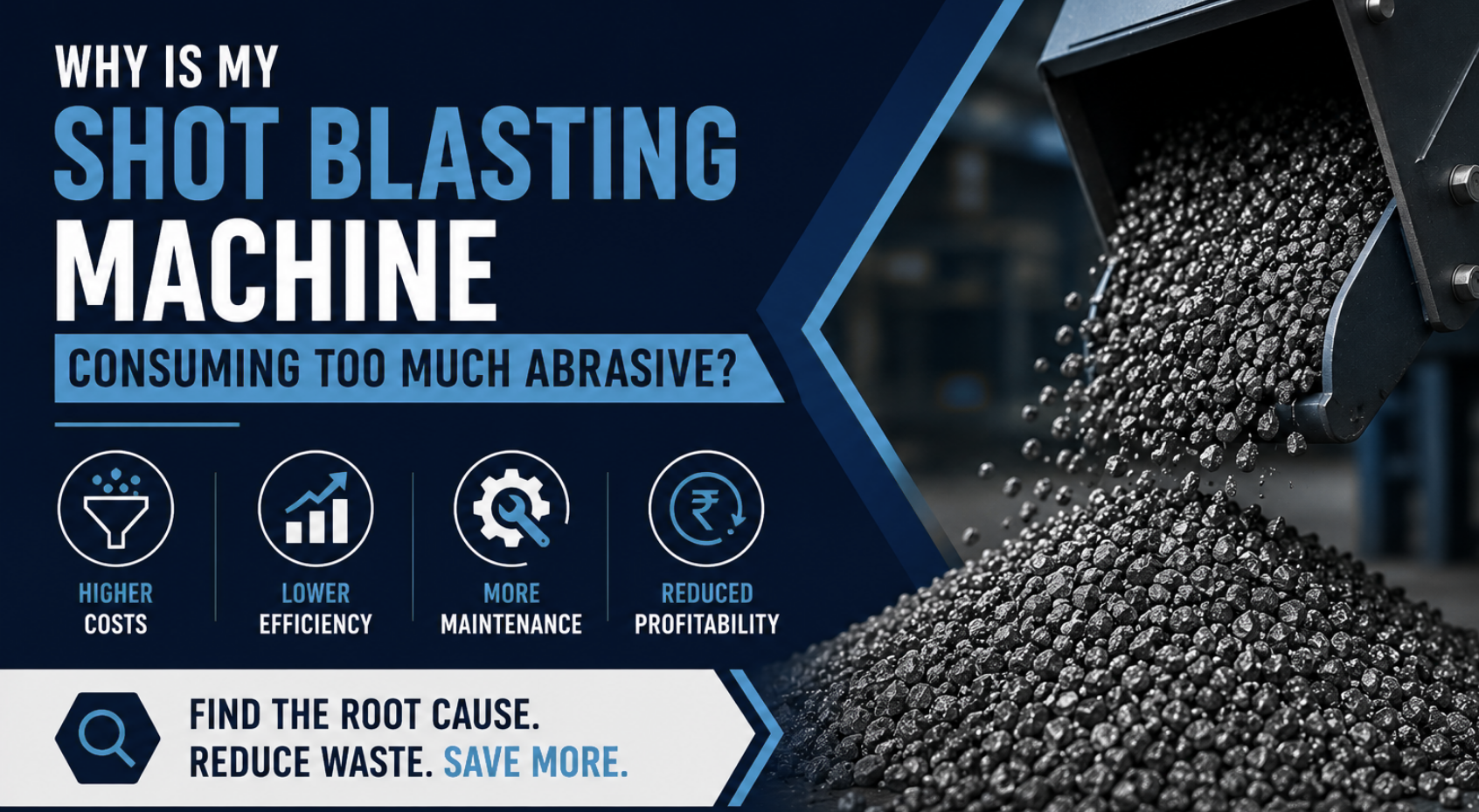
Excessive abrasive consumption is often a symptom of a bigger problem
Abrasive media represents one of the largest ongoing operating costs in shot blasting operations. Yet many manufacturers notice their abrasive consumption increasing month after month without understanding the real cause.
When steel shot or steel grit consumption rises unexpectedly, most facilities simply purchase more abrasive and continue production. Unfortunately, this approach treats the symptom rather than the root cause.
Excessive abrasive consumption is often an indication of equipment inefficiencies, poor maintenance practices, separator issues, improper blasting parameters, or worn machine components.
If left unresolved, high abrasive consumption can increase operating costs, reduce profitability, lower blasting quality, and shorten equipment life.
Understanding why abrasive loss occurs is the first step toward reducing operating expenses and improving overall blasting performance.
Why abrasive consumption matters
Many manufacturers underestimate the long-term financial impact of abrasive loss.
While a small increase in daily media consumption may seem insignificant, the annual cost can become substantial.
Excessive abrasive usage often leads to:
- Higher operating costs
- Increased purchasing expenses
- More waste generation
- Reduced blasting efficiency
- Increased downtime
- Higher maintenance requirements
At SPT Blastech, we frequently find that facilities focusing only on abrasive purchasing costs overlook the underlying process issues causing the problem.
Reducing abrasive consumption often improves productivity and blasting consistency at the same time.
1. Poor abrasive recovery system performance
One of the most common causes of excessive media consumption is an inefficient abrasive recovery system.
The recovery system is responsible for collecting, cleaning, and recirculating reusable abrasive back into the blasting process.
When the system is not functioning properly:
- Good media is discarded
- Recovery efficiency decreases
- Operating costs increase
- Blasting consistency suffers
Common causes include:
- Damaged recovery conveyors
- Improper bucket elevator operation
- Separator misalignment
- Blockages within the recovery circuit
Even small recovery inefficiencies can result in significant annual abrasive losses.
2. Incorrect separator adjustment
The abrasive separator plays a critical role in media classification.
Its job is to separate:
- Reusable abrasive
- Broken media
- Dust
- Rust particles
- Contaminants
If separator settings are incorrect, valuable abrasive may be discarded along with waste material.
Common symptoms include:
- Excessive abrasive in dust collection systems
- Increased media replacement frequency
- Inconsistent blasting quality
At SPT Blastech, separator adjustment is one of the first areas we inspect when customers report unusually high abrasive consumption.
3. Worn blast wheel components
The blast wheel is the heart of every shot blasting machine.
Over time, components such as:
- Blades
- Control cages
- Impellers
- Distribution sleeves
become worn.
When this happens:
- Abrasive flow becomes inconsistent
- Media impact efficiency decreases
- More abrasive is required to achieve the same cleaning result
Many facilities continue operating with worn components because the machine appears functional. However, blasting efficiency often drops significantly before obvious performance problems become visible.
4. Damaged chamber liners and seals
Abrasive loss can occur when media escapes through damaged machine areas.
Common leak points include:
- Chamber seals
- Access doors
- Worn liners
- Conveyor openings
- Material entry and exit points
These losses often go unnoticed because they occur gradually.
Over time, however, media leakage can become a major contributor to operating costs.
Regular inspection of wear zones is essential for controlling abrasive consumption.
5. Using the wrong abrasive type
Not all abrasives are suitable for every application.
Using the wrong abrasive can result in:
- Faster media breakdown
- Excessive dust generation
- Reduced cleaning efficiency
- Increased consumption rates
Factors affecting abrasive life include:
- Hardness
- Shape
- Size
- Quality
Abrasive selection should always match the cleaning requirements and machine design.
Choosing media based solely on purchase price often increases long-term operating costs.
6. Poor abrasive quality
Low-quality abrasive frequently contains:
- Irregular particle sizes
- Weak particles
- Excessive fines
- Manufacturing defects
These abrasives break down more quickly during blasting operations.
Consequences include:
- Increased replacement frequency
- Higher dust generation
- Reduced cleaning performance
- Higher operating costs
While premium abrasive may have a higher purchase price, it often delivers lower cost per ton processed.
7. Excessive blasting intensity
Many operators assume that increasing blasting intensity automatically improves cleaning performance.
In reality, excessive intensity can:
- Accelerate abrasive breakdown
- Increase equipment wear
- Raise energy consumption
- Increase operating costs
Proper parameter optimization is essential.
The objective is to achieve required cleanliness standards using the minimum amount of energy and abrasive necessary.
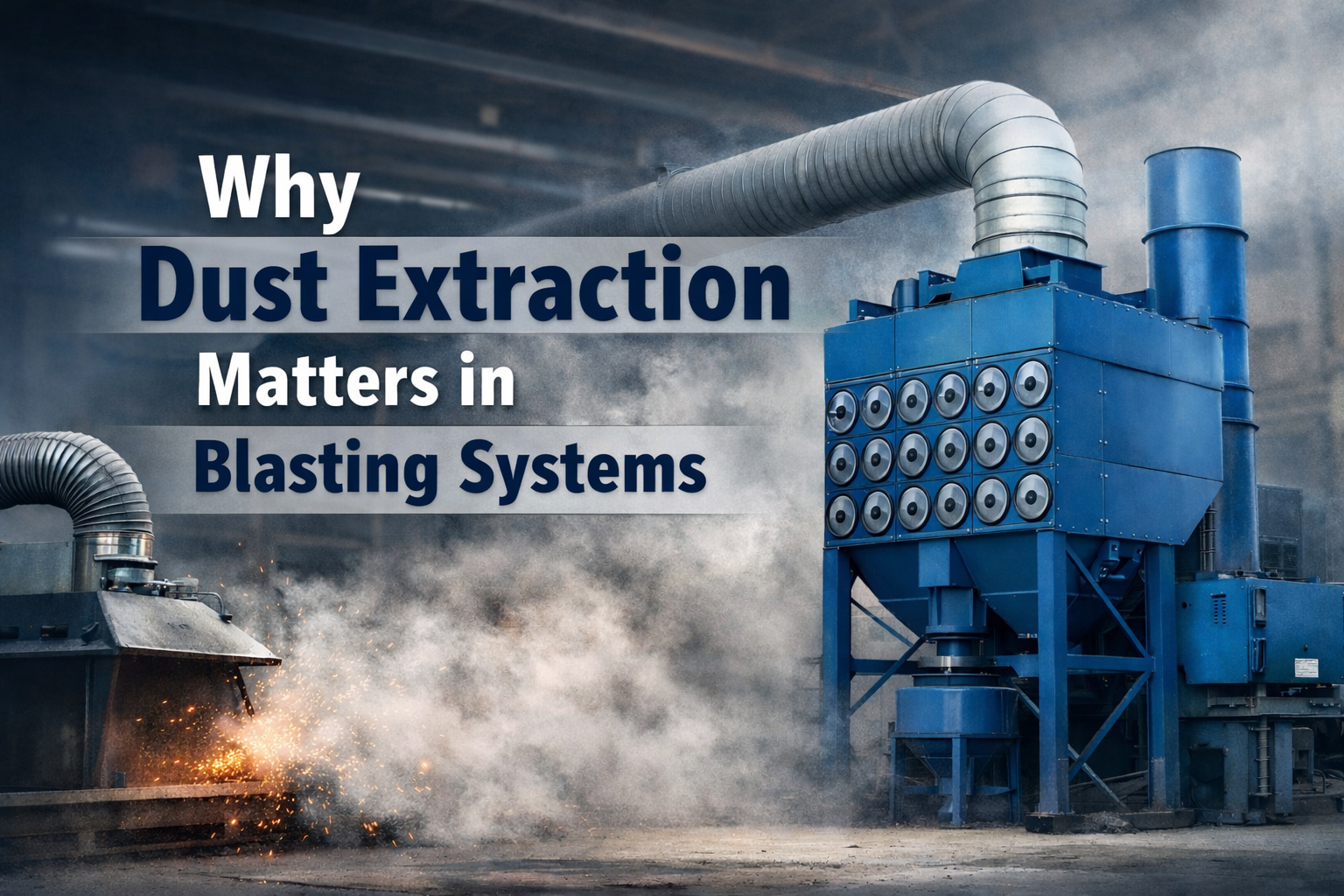
8. Inefficient dust collection systems
Dust collection systems influence abrasive recovery more than many operators realize.
Poor dust collection performance can cause:
- Reusable media to be extracted with dust
- Separator efficiency issues
- Increased contamination levels
- Reduced blasting consistency
Common warning signs include:
- Excessive abrasive found in dust bins
- Increased dust generation
- Reduced visibility inside the blasting chamber
A properly maintained dust collector helps protect abrasive quality and reduce waste.
9. Inadequate preventive maintenance
Many abrasive consumption issues develop gradually over time.
Without regular inspections, small inefficiencies become expensive problems.
Critical maintenance items include:
- Blast wheel inspection
- Separator adjustment
- Conveyor condition
- Chamber liner wear
- Seal integrity
- Dust collector performance
Facilities with structured preventive maintenance programs typically experience significantly lower abrasive consumption than those relying on reactive maintenance.
10. Lack of performance monitoring
Many companies do not track abrasive consumption accurately.
Without measurement, identifying abnormal consumption trends becomes difficult.
Useful KPIs include:
- Abrasive consumption per ton processed
- Abrasive consumption per shift
- Recovery efficiency
- Dust generation rates
- Separator performance
Monitoring these metrics helps identify problems before costs escalate.
Warning signs your abrasive consumption is too high
Common indicators include:
- Frequent media replenishment
- Increased abrasive purchasing costs
- Excessive dust generation
- Reduced blasting performance
- Higher maintenance expenses
- Visible abrasive leakage around the machine
If multiple symptoms are present, a detailed system inspection should be performed.
Quick comparison: efficient vs inefficient blasting operation
| Factor | Efficient Operation | Inefficient Operation |
| Abrasive Recovery | High recovery rate | Significant media loss |
| Separator Performance | Accurate classification | Good media discarded |
| Blast Wheel Condition | Consistent impact energy | Reduced efficiency |
| Dust Collection | Minimal abrasive loss | Excessive media extraction |
| Maintenance | Preventive approach | Reactive repairs |
| Operating Costs | Controlled and predictable | Increasing continuously |
Frequently asked questions
What is the most common cause of excessive abrasive consumption?
Poor separator adjustment and inefficient recovery systems are among the most common causes.
Can worn blast wheel components increase abrasive consumption?
Yes. Worn blades, control cages, and impellers reduce blasting efficiency, requiring more abrasive to achieve the same cleaning result.
Does dust collection affect abrasive usage?
Absolutely. Poor dust collection performance can remove reusable abrasive from the blasting process and increase overall consumption.
How often should abrasive consumption be monitored?
Consumption should ideally be tracked daily and reviewed monthly to identify abnormal trends.
Can better maintenance reduce abrasive costs?
In most cases, yes. Preventive maintenance is one of the most effective ways to improve recovery efficiency and reduce abrasive waste.
Final takeaway
Excessive abrasive consumption is rarely caused by abrasive alone.
In most cases, rising media costs indicate underlying problems related to recovery systems, separator settings, machine wear, blasting parameters, or maintenance practices.
Manufacturers that identify and correct these issues often achieve:
- Lower operating costs
- Improved blasting quality
- Better equipment reliability
- Reduced downtime
- Increased profitability
Need help reducing abrasive consumption?
Many facilities unknowingly lose thousands of rupees each month through inefficient abrasive recovery and machine performance issues.
At SPT Blastech, we help manufacturers evaluate:
- Abrasive recovery efficiency
- Separator performance
- Blast wheel condition
- Dust collection effectiveness
- Overall blasting process optimization
Our experts can help identify the root causes of excessive abrasive consumption and recommend practical solutions to reduce costs and improve performance.
Contact SPT Blastech today and discover how much your operation could save by optimizing abrasive usage.