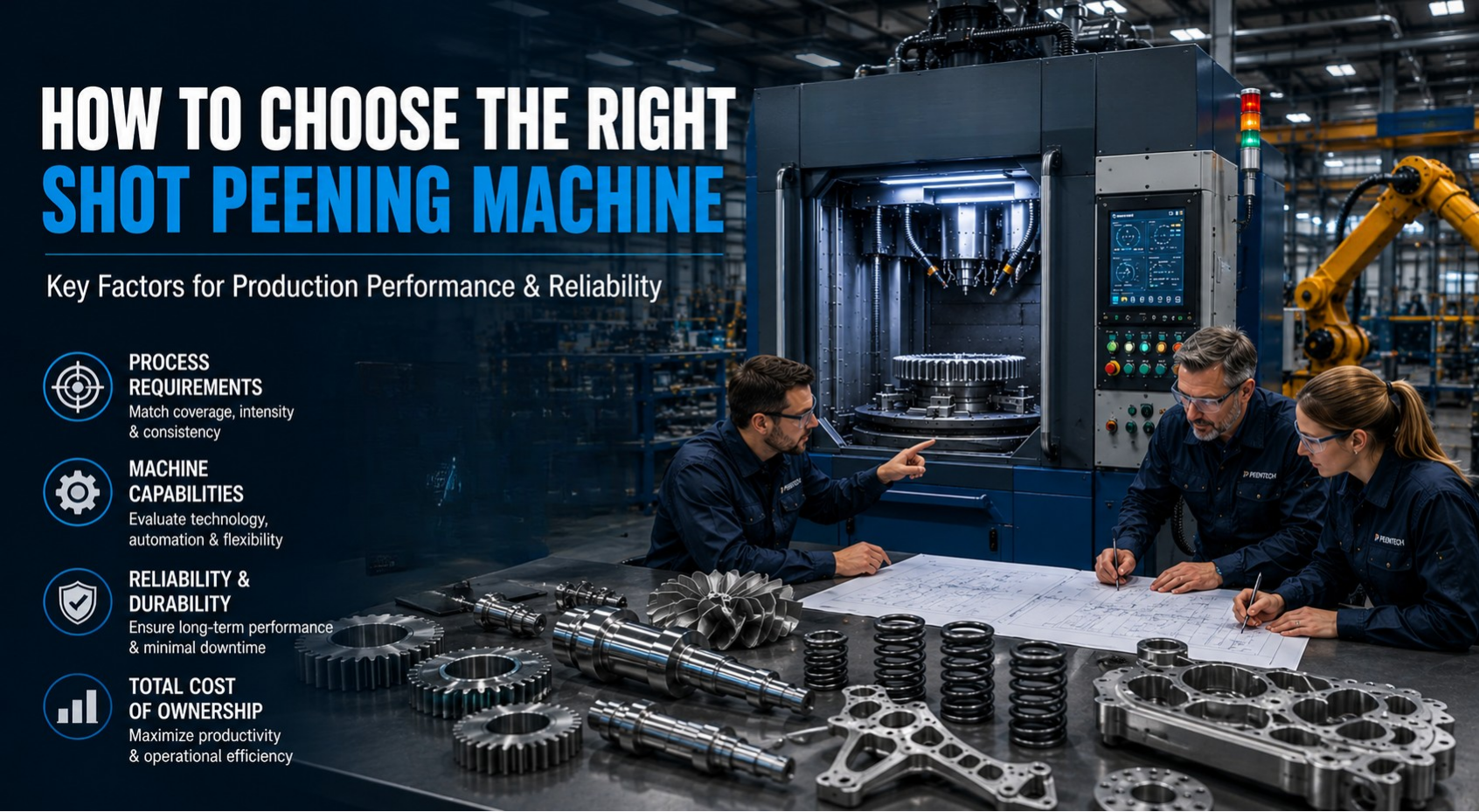
Selecting the right shot peening machine requires more than comparing specifications
Shot peening is a critical manufacturing process used to improve fatigue strength, increase component durability, and extend service life. Industries such as aerospace, automotive, railways, defense, and heavy engineering rely on shot peening to improve the performance of highly stressed components.
However, achieving consistent results depends on choosing a machine that aligns with production requirements. Many buyers focus only on machine size or purchase price, but the real value of a shot peening system lies in process consistency, reliability, and long-term operational performance.
Selecting the right machine requires careful evaluation of production goals, component characteristics, quality requirements, and future growth plans.
Understand your production objectives
Before evaluating equipment options, define what you expect the shot peening process to achieve.
Common objectives include:
- Increasing fatigue life
- Improving resistance to crack formation
- Enhancing component durability
- Reducing stress-related failures
- Improving reliability under cyclic loading
The desired outcome will influence machine configuration, process controls, and automation requirements.
Evaluate component size and geometry
The parts being processed play a major role in machine selection.
Important factors include:
- Component dimensions
- Weight
- Surface complexity
- Material type
- Accessibility of critical surfaces
Small precision components often require different equipment than large fabricated structures or heavy engineering parts.
Complex geometries may require robotic manipulation, multiple nozzles, or specialized work handling systems to achieve complete coverage.
Consider production volume requirements
Production demand directly affects machine selection.
Organizations should evaluate:
- Daily throughput requirements
- Production shifts
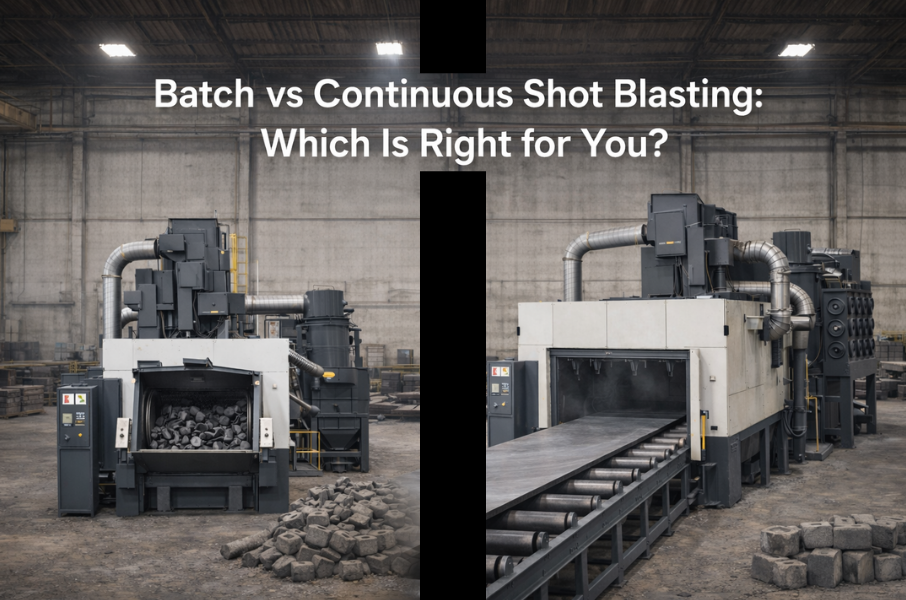
- Batch versus continuous operation
- Future volume projections
High-volume facilities generally benefit from automated systems capable of delivering repeatable results with minimal operator intervention.
Lower-volume operations may prioritize flexibility and lower capital investment.
Determine the right level of automation
Modern shot peening machines range from manual systems to fully automated robotic cells.
Automation can provide:
- Greater process consistency
- Reduced labor dependency
- Improved productivity
- Better quality control
- Enhanced repeatability
The ideal automation level depends on production volume, workforce availability, and quality expectations.
Process control is critical
Shot peening is a highly controlled process. Consistency depends on maintaining stable operating parameters.
Key process control features include:
- Almen intensity control
- Coverage monitoring
- Air pressure regulation
- Media flow control
- Process data recording
- Recipe management
Advanced control systems help maintain repeatable quality and simplify compliance with customer specifications.
Evaluate abrasive media management
Media quality directly affects peening performance.
A well-designed machine should provide:
- Efficient media recovery
- Contamination removal
- Consistent media flow
- Abrasive classification and separation
Proper media management improves process stability and reduces operating costs.
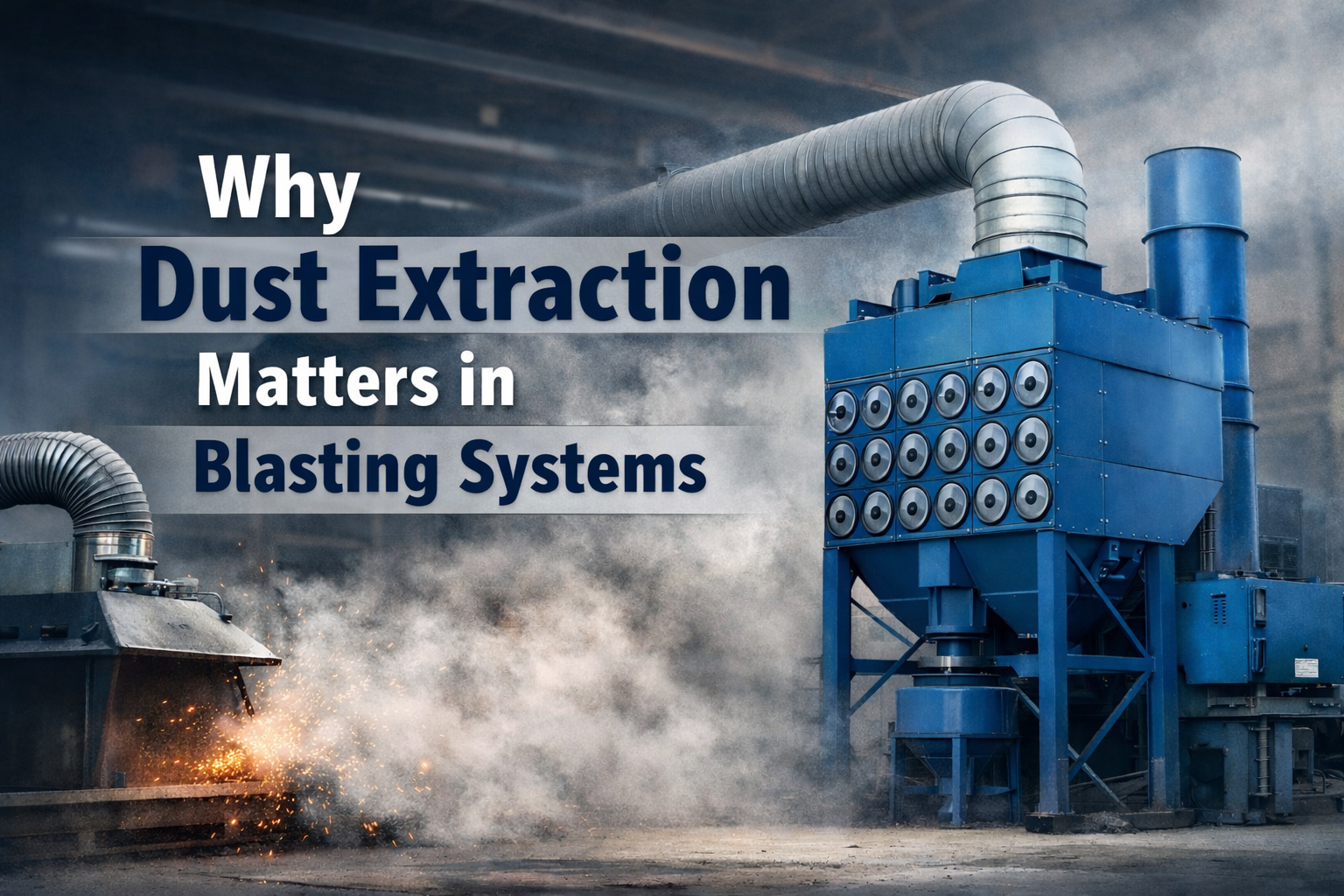
Dust collection affects process quality
Dust generated during shot peening can impact both machine performance and workplace conditions.
Effective dust collection systems help:
- Maintain process visibility
- Improve media quality
- Reduce contamination
- Protect operators
- Improve equipment life
Machines with integrated dust extraction systems generally provide more stable and reliable operation.
Maintenance and serviceability matter
Machine reliability depends on how easily critical components can be maintained.
Before purchasing, evaluate:
- Wear part accessibility
- Maintenance frequency
- Spare parts availability
- Service support capability
- Downtime risk
Easy maintenance often translates into lower lifecycle costs and improved productivity.
Think beyond today's requirements
Production needs rarely remain unchanged.
Organizations should consider whether a machine can support:
- Increased production volumes
- New product lines
- Additional automation
- Future process upgrades
A scalable solution protects investment and reduces the need for premature replacement.
Questions to ask before making a purchase
Before finalizing a decision, buyers should ask:
- Can the machine meet current and future production requirements?
- How is process consistency maintained?
- What automation options are available?
- How is quality verified?
- What support is available after installation?
- What are the expected operating costs?
These questions help identify the true long-term value of a machine.
Common mistakes during machine selection
Many organizations make avoidable purchasing mistakes, including:
- Choosing equipment based solely on price
- Ignoring future growth requirements
- Underestimating maintenance needs
- Overlooking process control capabilities
- Selecting insufficient automation levels
Avoiding these mistakes improves return on investment and long-term performance.
Industries that benefit from shot peening
Shot peening is widely used in:
- Aerospace manufacturing
- Automotive production
- Railway component manufacturing
- Power generation equipment
- Defense applications
- Heavy engineering industries
Each sector has unique requirements, making machine selection an important strategic decision.
Final takeaway
Choosing the right shot peening machine is about more than equipment specifications. The decision influences product quality, process consistency, operating costs, and long-term manufacturing performance.
By carefully evaluating component requirements, production volume, automation needs, process controls, and future growth plans, organizations can select a machine that delivers reliable results and supports sustainable operational success.
The most effective shot peening machine is not necessarily the largest or most expensive. It is the one that consistently meets production goals while maintaining quality, efficiency, and reliability.