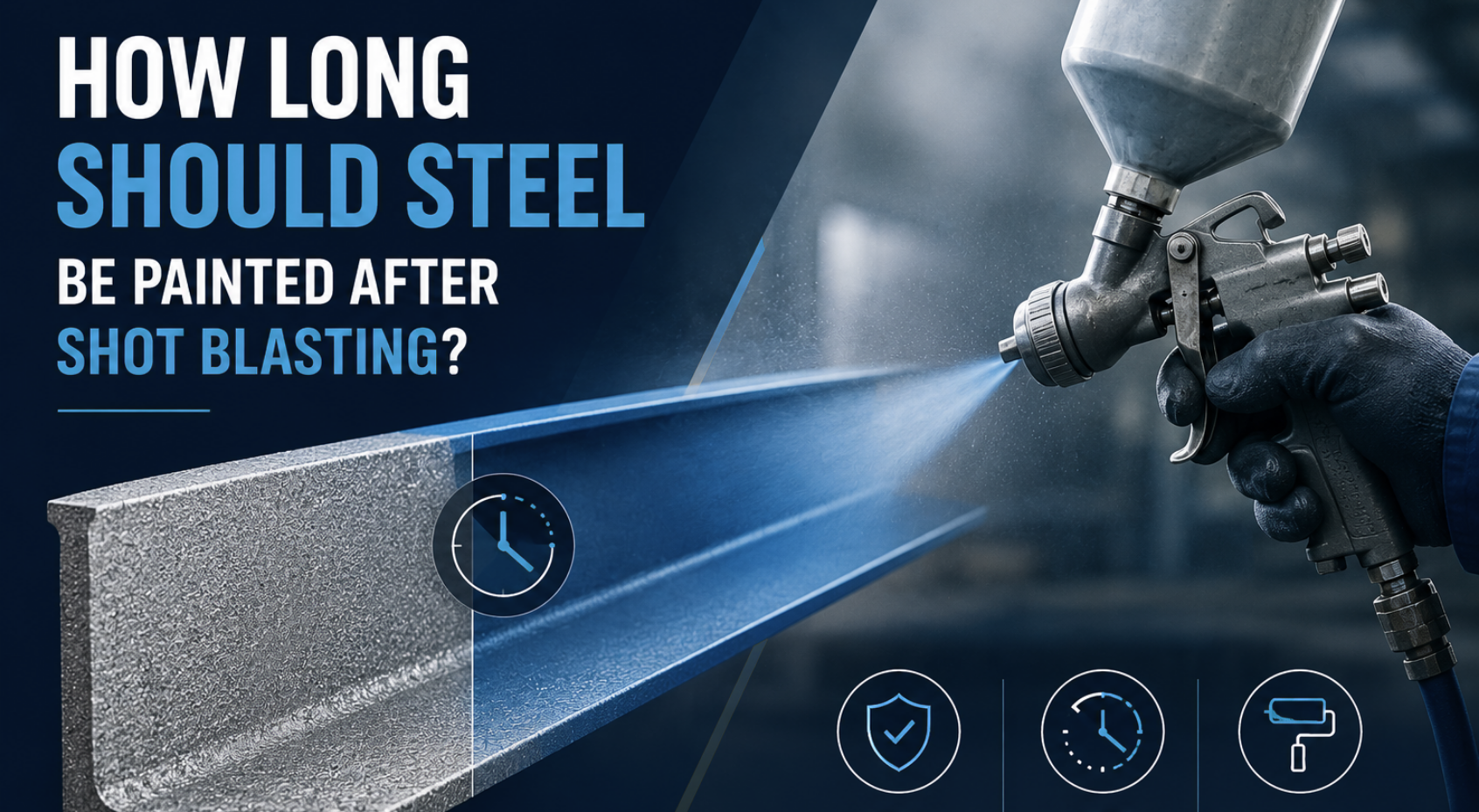
Delaying paint application after shot blasting can undo all your preparation work
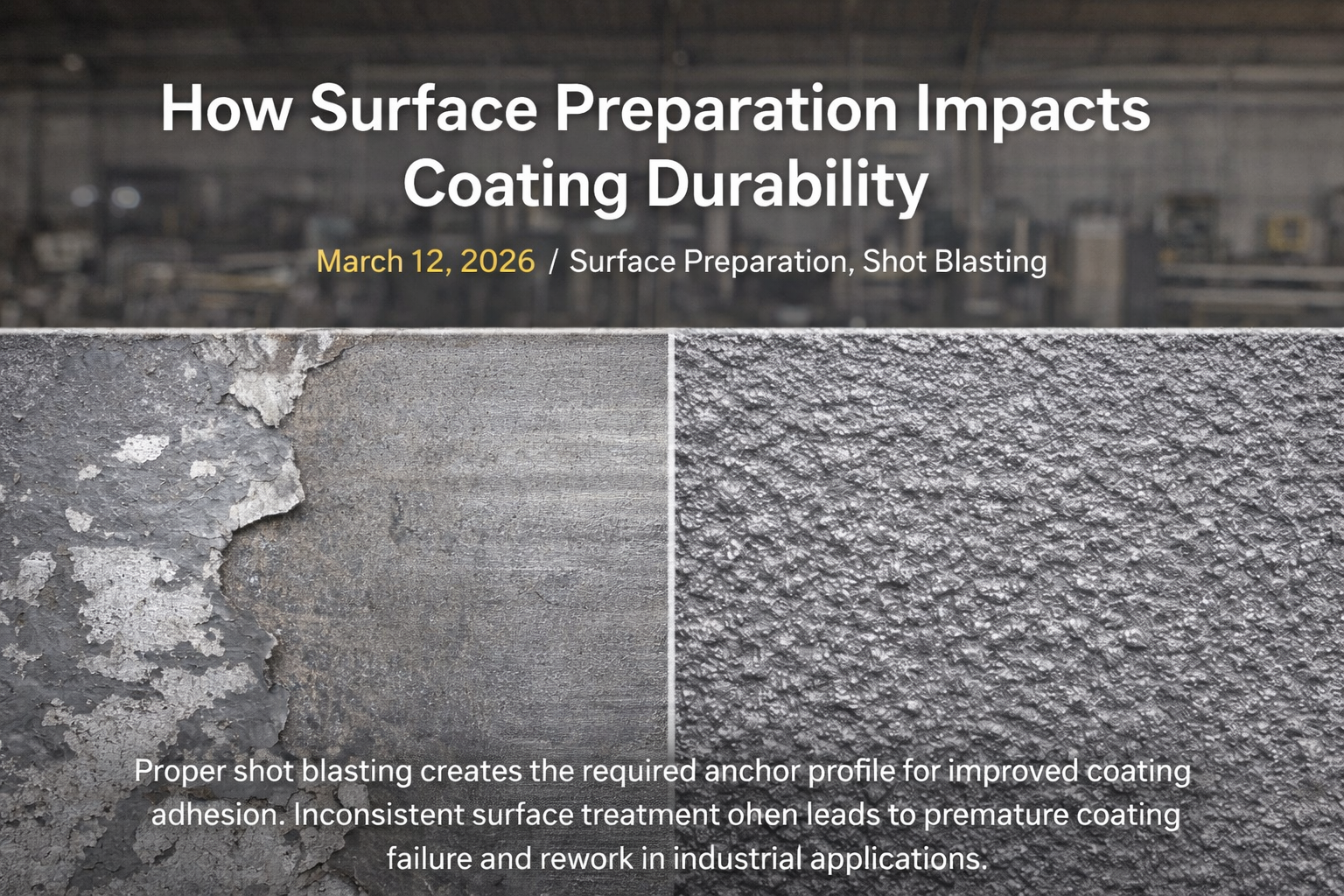
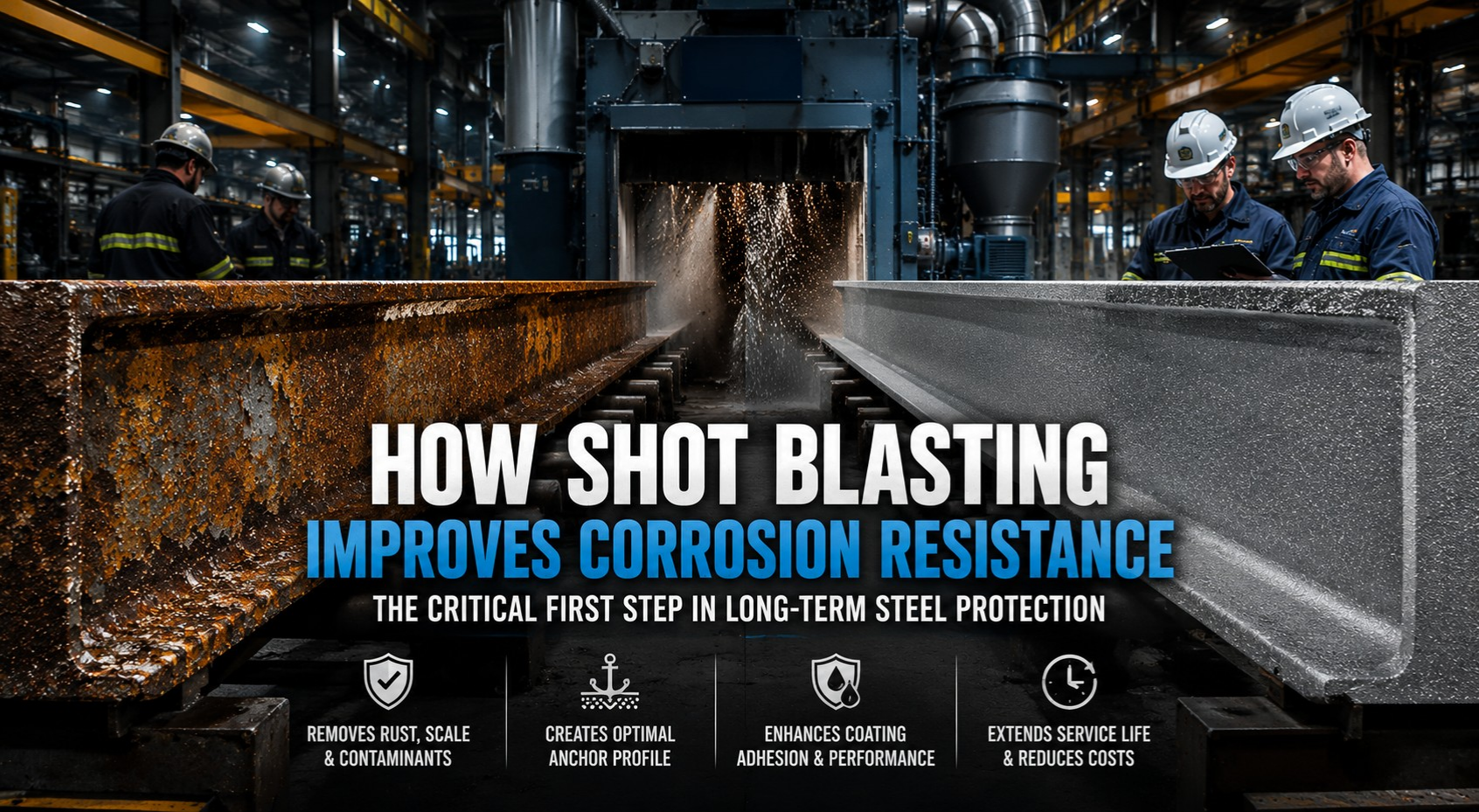
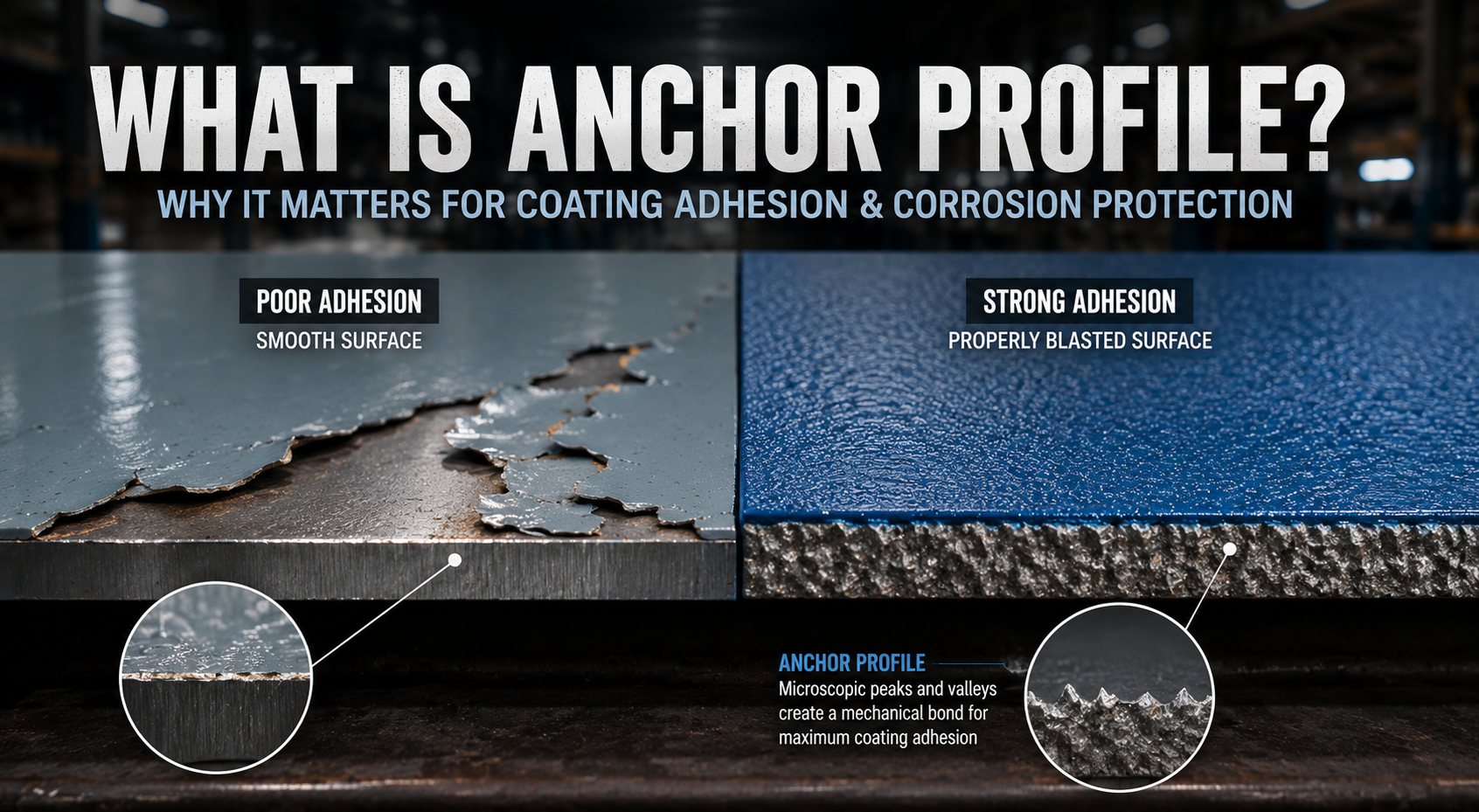
Many manufacturers invest significant time and resources into shot blasting steel surfaces. The blasting process removes rust, mill scale, contaminants, and old coatings while creating the anchor profile necessary for coating adhesion.
However, one critical question is often overlooked:
How long can steel remain unpainted after shot blasting?
The answer can have a major impact on coating performance, corrosion protection, and project costs.
Even perfectly blasted steel can begin deteriorating if it remains exposed for too long before painting. In some environments, surface contamination and flash rust can begin developing within hours.
Understanding the ideal painting window after blasting helps manufacturers avoid coating failures, rework costs, and premature corrosion.
Why timing matters after shot blasting
Shot blasting creates a clean and highly reactive steel surface.
While this clean surface is ideal for coating adhesion, it is also more vulnerable to environmental exposure.
Once blasting is completed, the steel immediately begins interacting with:
- Moisture
- Humidity
- Oxygen
- Airborne contaminants
- Salts
- Industrial pollutants
The longer the delay before painting, the greater the risk of contamination and corrosion.
At SPT Blastech, we frequently see coating performance issues caused not by poor blasting quality, but by excessive delays between blasting and painting.
What happens after steel is shot blasted?
A freshly blasted surface is extremely clean.
Most of the protective contamination layers that previously covered the steel have been removed.
As a result:
- The surface becomes highly active
- Moisture absorption increases
- Oxidation begins immediately
- Contamination can accumulate quickly
Although these changes may not always be visible to the naked eye, they can significantly affect coating performance.
This is why coating specifications often define maximum time limits between blasting and painting.
The biggest risk: flash rust
One of the most common problems after blasting is flash rust.
Flash rust is a thin layer of rust that forms rapidly on freshly blasted steel when moisture is present.
It may appear as:
- Light orange discoloration
- Brown staining
- Uniform surface rust
- Patchy corrosion spots
Flash rust can develop surprisingly quickly.
Factors influencing flash rust formation include:
- Relative humidity
- Surface temperature
- Ambient temperature
- Condensation
- Coastal environments
- Rain exposure
In humid environments, flash rust may begin forming within just a few hours.
How long should steel remain unpainted?
There is no universal answer because environmental conditions vary significantly.
However, industry best practice is simple:
Paint as soon as possible after blasting.
Many coating specifications recommend painting within:
- 4 hours in highly humid environments
- 8 hours in normal industrial environments
- 24 hours maximum under controlled conditions
The shorter the delay, the lower the risk of contamination and corrosion.
For critical applications, coating may begin immediately after blasting and inspection.
Factors that affect the painting window
Several variables determine how long blasted steel can remain exposed.
Relative humidity
Humidity is one of the most important factors.
Higher humidity accelerates:
- Oxidation
- Moisture absorption
- Flash rust formation
Many coating specifications restrict blasting operations when relative humidity exceeds recommended limits.
Surface temperature
Steel temperature influences moisture condensation.
When steel temperature approaches the dew point:
- Condensation risk increases
- Flash rust develops more rapidly
- Surface contamination becomes more likely
Environmental exposure
Outdoor storage creates greater risks than controlled indoor environments.
Exposure to:
- Rain
- Coastal air
- Dust
- Industrial pollutants
can significantly shorten the acceptable painting window.
Surface cleanliness
Even when rust does not form, contamination can accumulate.
Airborne dust, oils, salts, and debris can settle on blasted surfaces and reduce coating adhesion.
What if painting is delayed?
Delays sometimes occur due to:
- Weather conditions
- Production schedules
- Inspection requirements
- Equipment availability
- Labor shortages
When delays occur, the surface should be inspected carefully before coating.
Common consequences of delayed painting include:
- Flash rust formation
- Surface contamination
- Reduced adhesion
- Increased rework
- Premature coating failure
Ignoring these issues often creates much larger costs later.
How coating failure begins
Many coating failures start long before paint is applied.
A surface may appear acceptable visually while still containing:
- Microscopic corrosion
- Moisture contamination
- Salt contamination
- Dust particles
Once coating is applied over these contaminants:
- Adhesion decreases
- Corrosion spreads beneath the coating
- Blistering develops
- Peeling occurs
- Maintenance costs increase
The cost of repainting is almost always higher than the cost of proper surface preparation and timing.
Warning signs the surface may need re-blasting
Before painting, inspect the blasted surface carefully.
Warning signs include:
- Visible rust staining
- Flash rust
- Dust accumulation
- Moisture contamination
- Surface discoloration
- Extended exposure times
If contamination exceeds specification requirements, additional cleaning or re-blasting may be necessary.
Although re-blasting increases project costs, it is often less expensive than repairing coating failures later.
Best practices for minimizing delays
Manufacturers can reduce risks by coordinating blasting and coating operations effectively.
Recommended practices include:
- Schedule painting immediately after blasting
- Avoid unnecessary storage periods
- Protect blasted surfaces from moisture
- Monitor environmental conditions
- Verify dew point requirements
- Perform surface inspections before coating
These measures help preserve surface quality and maximize coating performance.
Indoor vs outdoor exposure
The acceptable painting window often depends on storage conditions.
| Condition | Risk Level |
| Climate-controlled indoor environment | Low |
| Covered industrial environment | Moderate |
| Open outdoor environment | High |
| Coastal environment | Very High |
| High-humidity environment | Very High |
Even under indoor conditions, prolonged delays increase contamination risks.
Common mistakes manufacturers make
Several mistakes repeatedly lead to coating problems.
Assuming blasted steel can wait indefinitely
Freshly blasted steel begins reacting with the environment immediately.
Ignoring humidity levels
Environmental conditions often determine coating success more than elapsed time.
Skipping surface inspections
A surface that appears clean may still contain contamination.
Painting over flash rust
Coating over rust almost always reduces long-term performance.
Separating blasting and painting schedules
Large gaps between blasting and coating increase the likelihood of quality issues.
Frequently asked questions
How soon should steel be painted after shot blasting?
Ideally, steel should be painted as soon as possible after blasting. Many projects target coating application within 4 to 8 hours.
Can blasted steel be left overnight?
It depends on environmental conditions. In controlled indoor environments it may be possible, but inspection should always be performed before painting.
What causes flash rust after blasting?
Flash rust develops when freshly blasted steel is exposed to moisture and oxygen.
Does flash rust always require re-blasting?
Not always. The severity of the rust and coating specification determine whether additional surface preparation is required.
Why is timing so important?
The longer steel remains exposed, the greater the risk of contamination, corrosion, and coating failure.
Business impact of delaying painting
Many companies focus on blasting quality but underestimate the impact of delayed coating application.
Even small delays can result in:
- Additional labor costs
- Surface rework
- Re-blasting expenses
- Coating failures
- Project delays
- Increased maintenance costs
Proper coordination between blasting and painting operations often delivers significant long-term savings.
Final takeaway
Shot blasting creates the ideal foundation for coating adhesion, but that surface condition does not last forever.
Freshly blasted steel begins reacting with the environment immediately, making timing a critical factor in coating success.
For most applications, the safest approach is simple:
Blast, inspect, and paint as quickly as possible.
Minimizing delays helps prevent flash rust, preserve surface cleanliness, improve coating adhesion, and maximize long-term corrosion protection.
Need help optimizing your surface preparation process?
At SPT Blastech, we help manufacturers improve:
- Surface preparation quality
- Blasting consistency
- Anchor profile control
- Corrosion protection performance
- Overall coating reliability
Our experts can help ensure your blasting and coating processes work together to deliver maximum durability and long-term asset protection.
Contact SPT Blastech today to discuss your surface preparation requirements and coating performance goals.