Why industrial coatings fail sooner than expected
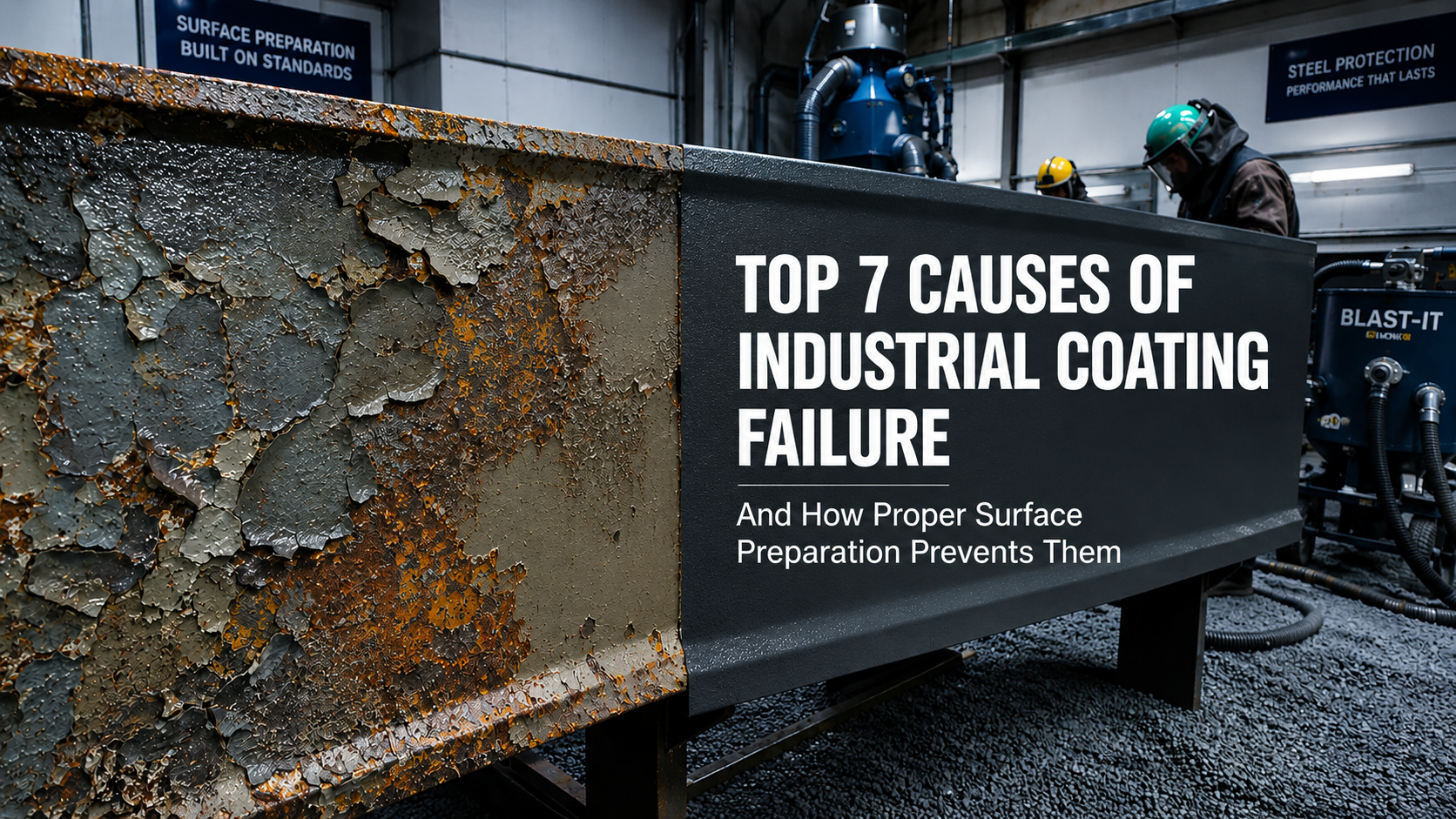
Industrial coatings are designed to protect steel from corrosion, moisture, chemicals, and environmental exposure. Yet many coating systems fail long before their expected service life. When failures occur, paint quality is often blamed first. In reality, coating failure is usually the result of process issues that begin long before the coating is applied.
Understanding the root causes of coating failure helps fabrication shops, steel processors, and maintenance teams improve durability, reduce rework, and lower lifecycle costs.
1. Poor surface preparation
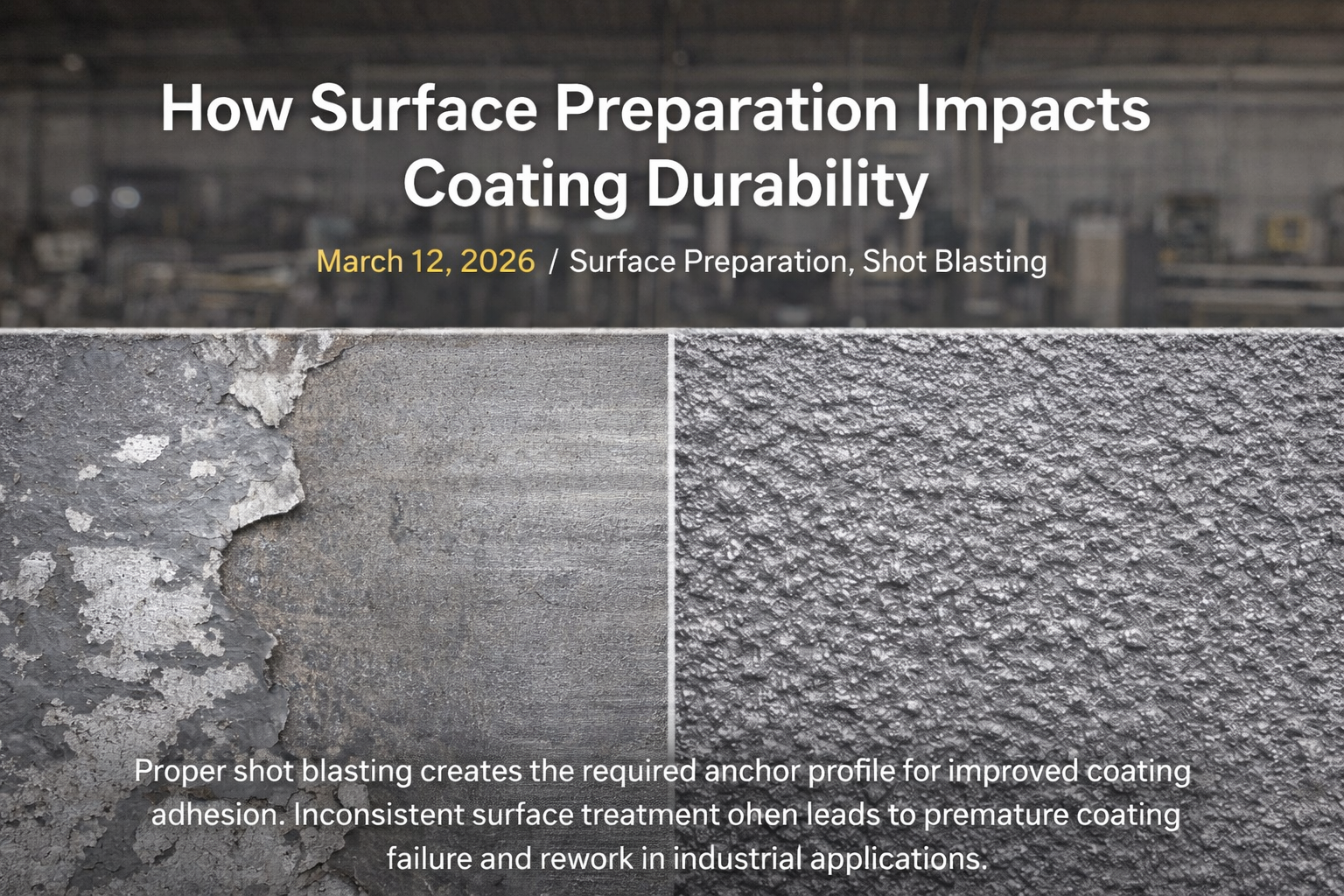
The most common cause of coating failure is inadequate surface preparation. Coatings require a clean, properly profiled surface to achieve strong adhesion.
Common preparation problems include:
- Residual rust and mill scale
- Inadequate blasting coverage
- Incorrect anchor profile
- Surface contamination before painting
When the surface is not prepared correctly, coatings may blister, peel, or delaminate prematurely.
2. Oil, grease, and surface contamination
Even a well-blasted surface can fail if contaminants remain before coating application.
Typical contaminants include:
- Oil and grease
- Cutting fluids
- Handling residue
- Soluble salts
- Dust and debris
Coatings bond to contamination instead of steel, creating weak points that allow moisture penetration and underfilm corrosion.
Proper cleaning and inspection should always precede blasting and coating operations.
3. Flash rust after blasting
Freshly blasted steel is highly reactive. In humid environments, oxidation can begin within a short period after blasting.
Flash rust can:
- Reduce coating adhesion
- Create coating defects
- Accelerate corrosion beneath the paint film
Facilities should define a maximum allowable time between blasting and coating to minimize exposure risks.
4. Incorrect coating application
Even with excellent surface preparation, poor application practices can compromise performance.
Common application errors include:
- Incorrect film thickness
- Improper mixing ratios
- Inadequate curing conditions
- Uneven spray coverage
Following manufacturer specifications and application procedures is critical for achieving expected coating performance.
5. Poor environmental control during painting
Environmental conditions have a major influence on coating quality.
Key factors include:
- Ambient temperature
- Relative humidity
- Surface temperature
- Dew point conditions
Painting outside recommended conditions can cause blistering, pinholes, poor curing, and adhesion issues.
Environmental monitoring should be part of every coating process.
6. Inadequate dust control
Dust contamination is a frequent but overlooked source of coating failure.
Dust may originate from:
- Blasting operations
- Production activities
- Poor housekeeping
- Inefficient dust extraction systems
Dust trapped beneath coatings creates weak adhesion zones and increases the likelihood of premature failure.
Proper dust extraction and cleanliness verification help improve coating reliability.
7. Lack of inspection and quality control
Many coating defects could be prevented through systematic inspection.
Critical inspection activities include:
- Surface cleanliness verification
- Anchor profile measurement
- Environmental condition monitoring
- Dry film thickness testing
- Visual coating inspection
Inspection should be proactive rather than corrective. Identifying issues before coating application is significantly less costly than repairing failures in service.
The cost of coating failure
Coating failure creates more than cosmetic problems. It can lead to:
- Increased maintenance frequency
- Production downtime
- Corrosion-related repairs
- Rework and repainting costs
- Reduced asset life
For industrial facilities, the financial impact often exceeds the cost of implementing proper preparation and quality control procedures.
Best practices to improve coating performance
Organizations seeking longer coating life should focus on:
- Consistent surface preparation standards
- Effective contamination control
- Timely coating after blasting
- Proper environmental monitoring
- Reliable dust extraction systems
- Structured inspection procedures
When these controls work together, coating durability improves significantly and maintenance costs decrease.
Final takeaway
Most coating failures are preventable. The root causes typically originate in surface preparation, contamination control, application quality, or inspection discipline rather than the coating itself.
Facilities that treat blasting, cleaning, environmental control, and quality verification as integrated parts of the coating process achieve better corrosion protection, longer service life, and lower lifecycle costs.
Strong coatings begin with strong process control long before the first layer of paint is applied.